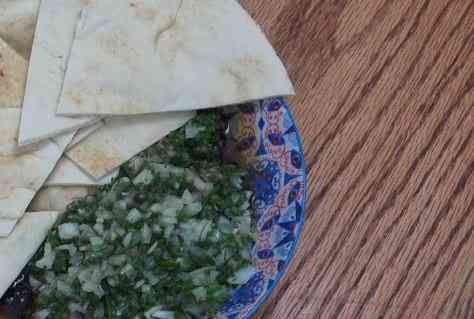
Some dishes don’t need much to be special. Just a few fresh ingredients, mixed together the right way, and that’s enough. Salatet zaatar akhdar, a Lebanese oregano salad, is one of those dishes.
It’s very simple. Fresh wild oregano leaves are tossed with sliced onions, a little sumac, lemon juice, and good olive oil. That’s it.
In many Lebanese homes, no one measures anything. Still, giving measurements can help if you’re making it for the first time.
When wild oregano is in season, especially in spring, this salad is a favorite. It’s quick, healthy, and full of flavor.
What is Zaatar Akhdar and Where Does it Come From?
Zaatar akhdar translates literally to “green zaatar” or “fresh zaatar,” and it refers specifically to the fresh leaves of wild oregano, botanically known as Origanum syriacum. This is the wild cousin of the Mediterranean oregano you might be familiar with, but with a more peppery, slightly bitter taste and a more pungent, complex aroma.
This bushy perennial herb is native to the Levant – Lebanon, Syria, Jordan, Palestine, and parts of Turkey – where it grows wild throughout the rocky hillsides. In Lebanon, it appears at the beginning of spring, carpeting the hills with its aromatic presence. For centuries, Lebanese people have foraged wild oregano from these hills, using it both fresh in salads and dried to make the famous zaatar spice blend.
What Kind of “Zaatar” to Use
The word “zaatar” causes considerable confusion, particularly in the West, because it refers to multiple things:
Zaatar akhdar (fresh wild oregano): The fresh, leafy herb itself – Origanum syriacum. This is what we’re using in this salad.
Zaatar spice blend: The dried seasoning mixture made from ground dried oregano (Origanum syriacum), sumac, sesame seeds, and salt. This is what you mix with olive oil and spread on flatbread to make manakish.
Zaatar (the plant name): In Arabic, “zaatar” can refer to any number of aromatic herbs in the oregano/thyme family, though most commonly it means Origanum syriacum.
To make it simple, fresh zaatar akhdar (wild oregano) is a major component in making the zaatar spice blend that has gone truly global. The fresh herb is dried, ground into a powder, then combined with sumac and sesame seeds to create the blend. Though the blend varies from country to country and family to family, these are the standard ingredients.
For this salad, we’re using the fresh herb, zaatar akhdar.
Wild Oregano vs. Common Oregano for Zaatar Akhdar
It’s important to distinguish between wild oregano (Origanum syriacum) and the common oregano you find in most supermarkets (Origanum vulgare):
Flavor: Wild oregano has a more complex, peppery, slightly bitter taste with pronounced aromatic qualities. Common oregano is milder and sweeter.
Appearance: Wild oregano has larger, more substantial leaves and grows in bushier, more upright clumps. Common oregano has smaller leaves and tends to creep along the ground.
Growing region: Wild oregano is native to the Levant and prefers hot, dry, rocky conditions. Common oregano is native to the Mediterranean and grows in a wider range of conditions.
Culinary use: In Lebanon, wild oregano is eaten both fresh (in salads) and dried (in spice blends and as a general seasoning). Common oregano is almost always used dried.
For this salad, you really want Origanum syriacum if you can find it. Some Middle Eastern markets sell it fresh in spring, or you can grow it yourself. If you absolutely can’t find it, use the freshest, most flavorful oregano you can source, preferably a Greek or Syrian variety, but know that the flavor will be different.
Lebanese Oregano Salad Ingredients
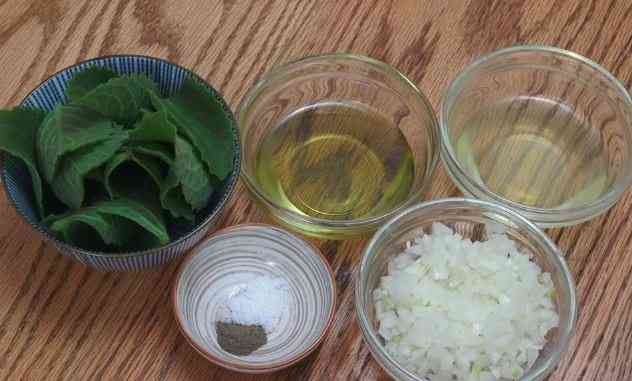
This salad is very simple to make, and you need only a few ingredients. That means each one really matters. When the ingredients are fresh and of good quality, the salad tastes better.
Here’s what you’ll need.
Wild Oregano (Zaatar Akhdar)
Wild oregano – about 4 bunches (around 400g with stems, giving about 4 cups leaves once picked)
This is the heart of the salad. Look for bunches with bright green leaves that smell fresh and strong. The top stems should be soft and tender. If the stems are thick and woody, the plant is older, and the leaves may taste more bitter.
Spring is the best time to use wild oregano. Before the plant flowers, the leaves are softer and less bitter. After flowering, they become stronger and tougher — still edible, just more intense.
Where to find it:
- Middle Eastern grocery stores in spring
- Some farmers’ markets in warm climates
- Or grow it yourself — Origanum syriacum grows well in pots or gardens with plenty of sun and good drainage
If you can’t find wild oregano:
- Fresh Greek oregano
- Fresh Syrian oregano
- Regular supermarket oregano (milder, but works)
- Fresh thyme (different taste, but still nice)
The Onion
1 large onion, very finely chopped
Try to chop it small so it blends into the salad instead of standing out in big pieces.
Sweeter onions work beautifully:
- Vidalia
- Walla Walla
- Red onion
Some people prefer white or yellow onions for a sharper bite. It’s really up to you.
If the onion tastes too strong, soak the chopped pieces in ice water for about 10 minutes. Then drain well before using.
The Dressing
Sumac – 1½ teaspoons
Sumac is a deep red spice made from dried berries. It tastes tangy and slightly earthy. It gives the salad a gentle lemony kick and makes all the flavors pop.
It’s hard to replace. If you absolutely can’t find it, you can add a little extra lemon zest, but it won’t taste exactly the same.
Fresh Lemon Juice – ¼ cup
Always use fresh lemon. Bottled juice tastes flat and won’t give you the same nice flavor.
Extra Virgin Olive Oil – ⅓ cup
Use good olive oil here. You’ll taste it. A fruity, slightly peppery oil works best. Lebanese, Palestinian, Greek, or Italian olive oils are all great choices.
This is not the place for bland or low-quality oil. The olive oil blends with the oregano and helps carry all the flavor.
Salt – to taste
Start with a little and adjust. Salt balances the slight bitterness of the oregano and brings everything together.
How to Make Salatet Zaatar Akhdar Step-By-Step
The whole process for making the salad takes about 20 minutes. Most of that time is just removing the leaves from the oregano.
Step 1: Remove the Oregano Leaves
This is the longest part, but it’s easy once you get the hang of it.
Wild oregano has small leaves and firm stems. Instead of picking off each leaf one by one, do this:
- Hold the top of a sprig in one hand.
- With your other hand, gently pinch the leaves between your fingers.
- Slide your fingers down the stem in one smooth motion.
The leaves will fall off quickly, and you’ll be left with a bare stem. Repeat until you have about 4 cups of leaves.
Throw away the stems, or keep them to dry for tea. They still have aroma, even if they’re too tough to eat.
This same method works for other herbs like thyme or rosemary.
Step 2: Wash the Leaves Well
Wild herbs can carry dirt or tiny insects, so wash them carefully.
- Put the leaves in a large bowl.
- Fill with cold water and gently move them around.
- Lift the leaves out of the water into another bowl. Don’t pour them through a strainer — the dirt will just fall back on them.
- Repeat this 2 or 3 times until the water looks clean.
Step 3: Dry the Leaves
After the last rinse:
- Take a handful of leaves and gently squeeze them between your palms to remove extra water.
- Don’t press too hard. You don’t want to crush them.
- Place them in a large salad bowl.
They should feel slightly damp, but not dripping. If they’re too wet, the dressing won’t stick properly.
Step 4: Add the Onion
Add your finely chopped onion to the bowl with the oregano. Make sure it’s chopped small, so it spreads evenly through the salad.
Step 5: Add the Flavor
Now build the dressing directly in the bowl:
- Sprinkle the sumac over the leaves and onion.
- Pour the fresh lemon juice evenly over the top.
- Drizzle the olive oil across the surface, not all in one spot.
- Add a small pinch of salt to start.
Step 6: Toss Gently
Using your hands (the traditional way) or salad tongs:
- Toss everything gently but well.
- If using your hands, lightly massage the leaves so they absorb the dressing.
The oregano should be coated evenly, and the onion and sumac should be mixed throughout.
Step 7: Taste and Adjust
Taste it a little.
Does it need:
- More salt?
- More lemon?
- A little more sumac?
Adjust slowly until you’re ok with it.
Step 8: Serve
You can serve it right away while it’s still fresh. Or, you can let it sit for 5–10 minutes if you like the leaves slightly softened and the flavors more blended together.
You can serve alone or with pita bread, a sandwich, eggs, grilled meat, etc.
Frequently Asked Questions
What if I can’t find wild oregano (Origanum syriacum)?
Look for it at Middle Eastern markets in spring, or try growing it yourself. If unavailable, substitute with the freshest Greek or Syrian oregano you can find. Common supermarket oregano will work, but will be milder. Fresh thyme is also a different but pleasant alternative.
Can I reduce the onion?
Absolutely! Adjust to your preference. Some people use less onion or even omit it entirely.
Is this the same as the zaatar spice used on manakish?
No. This salad uses fresh wild oregano leaves. The zaatar spice blend is made from dried, ground oregano mixed with sumac, sesame seeds, and salt. They both come from the same plant, but they’re prepared differently.
My oregano seems tough. What should I do?
Use only the most tender leaves from the growing tips. If the whole plant seems tough, it may be too mature or past its prime. Younger plants in early spring are most tender. You can also massage the dressed salad more vigorously to help break down the leaves slightly.
How much is “4 bunches”?
About 400g (14 oz) with stems, which yields approximately 4 cups of de-stemmed leaves. The exact amount isn’t critical – adjust the other ingredients proportionally if you have more or less oregano.
Can I use dried oregano?
No, this recipe requires fresh oregano. Dried oregano has a completely different texture and flavor profile and wouldn’t work in a salad.
Lebanese Oregano Salad Recipe (Zaatar Akhdar)
Ingredients
Method
- Remove leaves from stems and wash well. Drain and gently squeeze out excess water.
- Place oregano in a bowl. Add onion and sumac.
- Pour in lemon juice and olive oil. Add salt.
- Mix well (use your hands if possible) until everything is coated.
- Adjust seasoning if needed. Serve immediately.
Notes
- Use fresh lemon juice and good olive oil for best flavor.
- If you can’t find wild oregano, use fresh oregano or thyme.
- Best eaten fresh, but can be kept in the fridge for a day.