Craving for an intense Lebanese garlic sauce? This authentic toum recipe is what you need. Made with just garlic, oil, lemon juice, and salt, this traditional Lebanese garlic paste is creamy with grilled meats, shawarma, and everything in between.
What Is Toum?
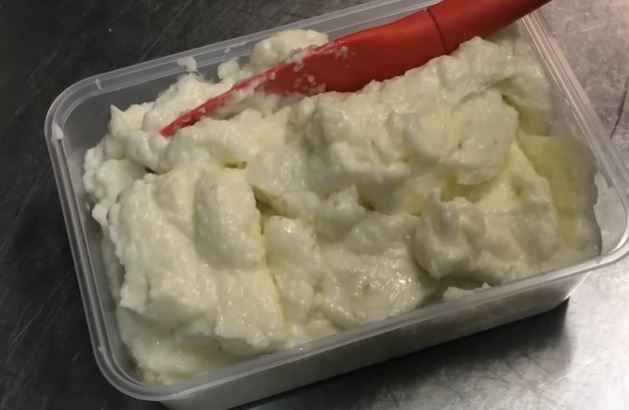
Toum (also spelled toom) is the Arabic word for “garlic,” but it isn’t just any garlic sauce; it’s a thick paste with the texture of whipped cream or mayonnaise and an intoxicating aroma of lemon and garlic.
What makes toum so special is how simple it is to make. It is made with only four ingredients – garlic, oil, lemon juice, and salt. No eggs, no dairy, no thickeners – just pure garlic.
Toum has variations across the Mediterranean and the Middle East. Egyptians call it “tooma,” Greeks have “skordalia,” and Spaniards make “aioli.” But the Lebanese version stands out for having a bright white color and an intense garlic flavor. It also uses neutral vegetable oil instead of the more traditional olive oil.
If you love this toum recipe, you’ll probably also enjoy Muthawama (garlic sauce with egg white), Tahini Sauce, Chicken Shawarma, Chicken Shish Tawook, Lebanese Grilled Chicken, and of course, serving it alongside Grilled Kafta or Lebanese-Style BBQ.
Toum Recipe Ingredients
Garlic
3 heads of garlic, peeled – This is approximately 30-40 cloves of fresh garlic. Yes, that’s a lot! Use the freshest, firmest garlic you can find. Remove any green sprouts from the center of the cloves as they add bitterness. This is the star ingredient, so quality matters. If using a large food processor, you need at least 3 heads of garlic for the blades to reach and process properly. Smaller quantities won’t work well in large processors.
Oil
4 cups vegetable oil – This is crucial: use a neutral oil like canola, sunflower, avocado, or peanut oil. Do NOT use olive oil, especially extra virgin – it’s too strong, becomes bitter when over-processed, and will overpower the garlic. The neutral oil is what gives toum its brilliant white color and allows the garlic flavor to shine. Traditional recipes used olive oil, but modern Lebanese cooks prefer vegetable oil for a lighter, less biting flavor.
Acid
1/2 cup fresh lemon juice – Freshly squeezed is essential. You’ll need about 4-5 lemons.
Seasoning
1 teaspoon salt (or to taste) – Salt helps break down the garlic and enhances all the flavors. It’s also part of what creates the paste texture when you first process the garlic. Use kosher salt or sea salt for best results.
How to Make Toum (Lebanese Garlic Sauce)
Step 1: Prepare your kitchen and ingredients
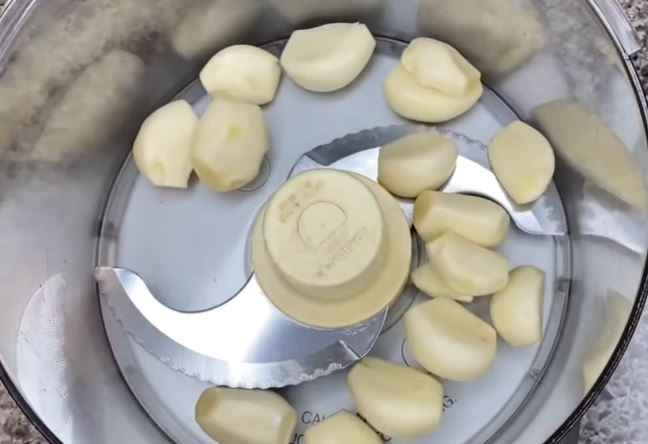
Make sure all ingredients are at room temperature. Have everything measured and ready. Peel all the garlic cloves (3 heads worth) and remove any green sprouts from the centers. This is tedious but important.
Step 2: Process the garlic and salt
Add the peeled garlic cloves and 1 teaspoon salt to your food processor. Run the processor for 10-20 seconds. Stop, scrape down the sides with a rubber spatula, then process again for another 10-20 seconds. Repeat this process 3-4 times until the garlic starts to turn pasty and smooth. You want it completely broken down with no large chunks remaining.
Step 3: Use the Processor
From this point forward, turn the processor on and KEEP IT RUNNING until the very end. You’ll be adding ingredients while it runs continuously.
Step 4: Start adding oil very slowly
With the processor running, begin adding the 4 cups of oil in an extremely thin, slow stream-almost drop by drop at first. This is the most critical step. After adding the first half cup of oil, you should start seeing the garlic turn into a shiny, white paste.
Step 5: Alternate with lemon juice
While the processor is still running continuously, add 1/2 teaspoon of lemon juice in a very slow, thin stream. Wait a few seconds for it to be well absorbed into the paste. The paste should remain thick and creamy.
Step 6: Continue the oil-lemon cycle
Keep alternating: add 1/2 cup of oil in a thin stream, wait a few seconds, then add 1/2 teaspoon of lemon juice, wait a few seconds. Repeat this cycle until you’ve used all 4 cups of oil and all 1/2 cup of lemon juice. This entire process should take 8-10 minutes. Patience is key. Don’t rush.
Step 7: Check the consistency
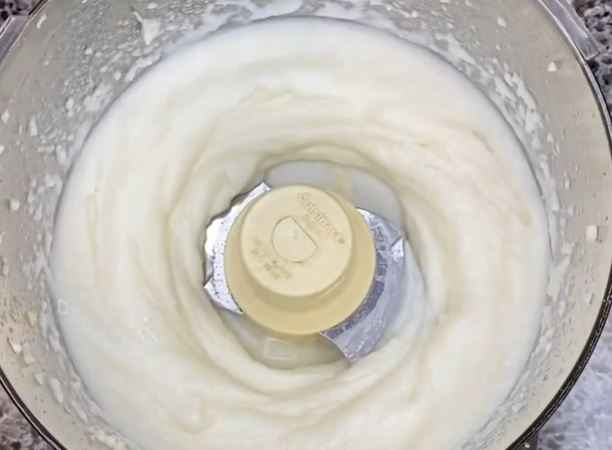
Once all the oil and lemon juice are incorporated, you should have a thick, fluffy, white paste that looks like whipped cream or soft-serve ice cream. It should hold soft peaks when you lift the processor blade or a spoon through it.
Step 8: Taste and adjust
Taste your toum and adjust seasoning if needed. You might want a tiny bit more salt or a squeeze more lemon juice. Pulse briefly if you make any additions.
Step 9: Transfer and store
Transfer the toum to an airtight container. Let it rest in the refrigerator for at least 1 hour before serving-this allows the flavors to meld and the texture to set slightly. The garlic flavor will actually mellow a bit over the next day or two.
Step 10: Serve
Serve your beautiful, fluffy toum alongside grilled chicken, shawarma, kebabs, roasted vegetables, or with pita bread. Watch it disappear.
Additions and Substitutions
Oil substitute: Any neutral oil works-canola, sunflower, safflower, avocado, grapeseed, or peanut oil. Never use olive oil in the full amount, though some traditional cooks use a small amount (1/4 cup) mixed with vegetable oil for subtle flavor.
Lemon juice substitute: Some cooks use water to blend everything together and add lemon juice only at the end. This can actually help prevent breaking. White vinegar can work, but lemon is traditional and best.
Add egg white: While not traditional, you can add 1 egg white at the beginning. However, some people (including many Lebanese cooks) feel it leaves a subtle aftertaste. Alternatively, you can use 1/2 teaspoon of soy lecithin powder, it won’t affect the taste.
For milder garlic: Blanch the peeled garlic cloves in boiling water for 2-3 minutes before using. This mellows the intensity significantly while keeping the garlic flavor.
Make it creamier: Some cooks add 2-3 tablespoons of Greek yogurt or labneh at the end for extra richness and tang.
Add herbs: A handful of fresh parsley or cilantro creates a beautiful green-tinted herbed version.
If using a small food processor: Reduce the recipe to 1-2 heads of garlic and adjust other ingredients proportionally. Large batches work better in large processors.
If it breaks: Don’t panic. Start fresh with 1 tablespoon of the broken mixture in a clean processor, then very slowly drizzle in the rest of the broken sauce. Alternatively, start with a new head of garlic processed with salt, then slowly add the broken sauce.
Toum Recipe FAQs
Why did my toum break or separate?
The most common reason is adding oil too quickly. The oil must be added in an extremely slow, thin stream-almost drop by drop at the beginning. Other reasons include: wrong oil temperature (ingredients should be room temperature), using too much or too little lemon juice relative to oil, stopping the processor during the process, or using a processor that’s too large for the amount of garlic.
Can I fix broken toum?
Yes! Start fresh with 1 tablespoon of the broken mixture in a clean food processor. Process it, then very slowly drizzle in the rest of the broken sauce. Alternatively, process a fresh head of garlic with salt, then slowly add the broken sauce to it.
Why can’t I use olive oil?
Olive oil, especially extra virgin, has a strong flavor that becomes bitter when over-processed in a food processor. It also overpowers the garlic flavor. Traditional recipes used olive oil because that’s what was available, but modern Lebanese cooks prefer neutral vegetable oils for a lighter, fluffier, whiter toum that lets the garlic shine.
Do I need to use eggs in toum?
No. Traditional toum uses no eggs — just garlic, which has enough natural lecithin to hold everything together. Some Lebanese cooks feel egg white leaves a subtle aftertaste, while others don’t notice it at all due to the strong garlic flavor.
Can I use a blender instead of a food processor?
It’s much more difficult. Food processors work best because they keep the ingredients moving and allow for better control. Immersion blenders can work, but are less reliable. With a regular blender, the oil just sinks to the bottom and never fully comes together.
How long does toum last?
Store in an airtight container in the refrigerator for 2-3 weeks. Some sources say up to a month, but fresher is always better. The garlic flavor actually mellows slightly after a few days in the fridge.
Can I freeze toum?
You can freeze toum for up to 3 months, though the texture may become slightly grainy when thawed. Thaw in the refrigerator overnight and stir well before using.
Want more bold Lebanese sauces and accompaniments?
Muthawama – Lebanese garlic sauce made with egg white or potato.
Tahini Sauce – Creamy sesame sauce perfect for falafel and shawarma.
Chicken Shawarma – The perfect pairing for toum!
Chicken Shish Tawook – Grilled marinated chicken skewers traditionally served with toum.
Dajaj Mishwi – Lebanese grilled chicken that’s incomplete without toum.
Grilled Kafta – Ground meat kebabs that love a dollop of garlic sauce.
Labneh – A cooling yogurt dip that provides a nice contrast to intense toum.
Toum Recipe (Lebanese Garlic Sauce)
Ingredients
Method
- Bring all ingredients to room temperature and peel the garlic, removing any green sprouts.
- Process the garlic with salt in a food processor until completely smooth and pasty.
- Keep the processor running continuously while making the emulsion.
- Slowly drizzle in the oil, starting almost drop by drop, until the mixture begins turning white and creamy.
- Add a small amount of lemon juice slowly, then continue alternating between oil and lemon juice until all are used.
- Continue processing slowly and steadily for about 8–10 minutes until the toum becomes thick, fluffy, and smooth.
- Taste and adjust salt if needed.
- Refrigerate for at least 1 hour before serving with meats, shawarma, vegetables, or pita bread.
Notes
- Refrigerate in airtight container for 2-3 weeks
- Can be frozen for up to 3 months (texture may change slightly)
- Store in multiple small containers rather than one large one
- Calories: 393
- Fat: 44g
- Carbohydrates: 2g
- Protein: 1g
- Note: Contains beneficial garlic compounds including allicin