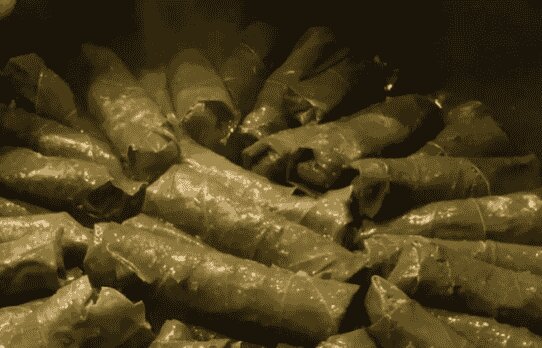
Craving tender grape leaves stuffed with rice, fresh herbs, and cooked in a lemon sauce? Then you should try out this vegan stuffed grape leaves (warak enab) from Lebanon. The Lebanese dolma rolls are packed with rice, chickpeas, tomatoes, mint, and parsley, then rolled tight and simmered until perfectly tender.
What Are Stuffed Grape Leaves (Warak Enab)?
Warak enab (also spelled warak inab or warak einab) literally means “grape leaves” in Arabic, and this dish of stuffed grape leaves is one of the most beloved preparations in Lebanese cuisine. These aren’t just any stuffed grape leaves – they’re tightly rolled bundles of tender grape leaves filled with a fragrant mixture of rice, herbs, tomatoes, and chickpeas, then simmered in a bright lemon sauce until everything is perfectly tender and infused with flavor.
What makes the Lebanese vegan version (also called dolma yalanci or “false dolma” because it contains no meat) special is its focus on fresh herbs and bright flavors. Unlike the meat-stuffed versions or the tomato-based variations found in Lebanese cooking, this vegan version is all about the interplay of fresh mint, parsley, lemon, and olive oil, making it light, refreshing, and very healthy.
In traditional Lebanese cuisine, there are at least three common versions of stuffed grape leaves: a meat and rice version (with ground lamb or beef), a version cooked in tomato sauce, and this vegan version cooked in a lemony sauce. Each has its place at the Lebanese table, but the vegan version is often served as part of a mezze spread or as a light main course, especially during Lent or when hosting vegetarian guests.
The Lebanese style of rolling warak enab differs from Greek dolmades or other Middle Eastern variations – Lebanese rolls are typically thinner, more tightly rolled, and packed with fresh herbs. The addition of chickpea halves is distinctly Lebanese, adding protein and a nutty texture that makes these rolls more substantial.
If you love this vegan stuffed grape leaves recipe, you’ll probably also enjoy Lebanese Rice Pilaf, Mujadara (lentils and rice), Tabbouleh (fresh herb salad), Fattoush, Hummus, and Baba Ganoush – all perfect dishes for a vegetarian mezze feast.
Why You’ll Love This Warak Enab Recipe
Bursting with fresh herb flavor – Mint, parsley, and lemon create bright, refreshing taste in every bite
Healthy and satisfying – Low in calories and fat but high in fiber, vitamins, and plant-based protein from chickpeas
Perfect for meal prep – Make a big batch and enjoy them all week, or freeze for future meals
Warak Enab or Dolma Recipe Ingredients
Grape Leaves
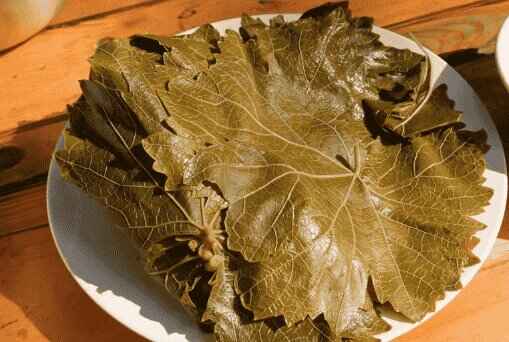
90 grape leaves (fresh or canned/jarred) – These are the wrappers for your rolls. Canned or jarred grape leaves preserved in brine are the most convenient option and can be found at Middle Eastern stores or the international section of most supermarkets. If using fresh grape leaves, pick young, tender leaves that are light green in color—avoid tough, dark green mature leaves. You’ll need about 90 leaves to account for some tears and imperfect ones.
Stuffing Ingredients
1/2 cup dried rice – Short-grain or medium-grain white rice works best. The rice cooks inside the grape leaves, absorbing all the flavors from the filling and the lemony cooking liquid. Don’t use instant or pre-cooked rice.
1/2 cup dried chickpeas, halves – Chickpeas add protein, texture, and a nutty flavor. Look for split chickpeas (chickpea halves) at Middle Eastern or Indian grocery stores. If you can’t find them, use whole dried chickpeas and crack them in half by applying pressure with the flat side of a knife or using a mortar and pestle. Don’t use canned chickpeas—they’re too soft and will turn mushy.
2 tomatoes, finely chopped – Fresh tomatoes add moisture, sweetness, and a subtle acidity to the filling. Dice them very finely so they distribute evenly. Roma or plum tomatoes work well as they’re less watery.
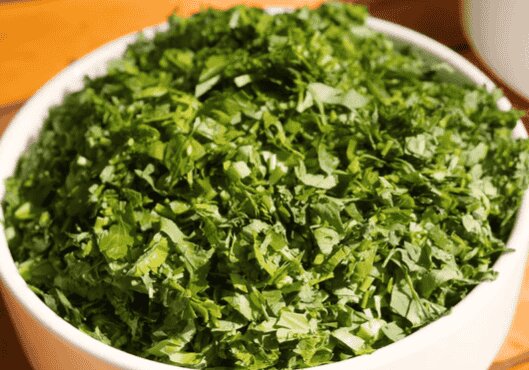
1 bunch Italian parsley, finely chopped (stems discarded) – Fresh flat-leaf parsley is essential! It adds bright, peppery, herbaceous flavor. Chop it very finely—you want about 1 cup of minced parsley. Discard the thick stems.
1 bunch fresh mint, finely chopped (stems discarded) – Fresh mint is absolutely essential in Lebanese warak enab! It adds a cooling, aromatic quality that makes these rolls distinctive. Use only the tender green leaves, finely minced. You’ll need about 3/4 cup minced mint.
1 bunch green onions, finely chopped – The entire green onion – white and green parts – adds mild onion flavor and aroma without overpowering the herbs.
2 teaspoons salt (divided) – Salt seasons the filling and the cooking liquid. You’ll use 1 teaspoon in the filling and 1 teaspoon in the cooking liquid.
For the Base Ingredients
1 onion, sliced into thin disks – These create a protective layer on the bottom of the pot to prevent the grape leaves from sticking and burning.
1 tomato, sliced into thin disks – Along with the onion slices, this creates a flavorful base and prevents sticking.
Cooking Liquid
3/4 cup olive oil (divided) – Olive oil is essential for both the filling (1/4 cup) and the cooking liquid (1/2 cup). It adds richness and authentic Lebanese flavor.
1 cup fresh lemon juice (divided) – You’ll need about 5-6 lemons. Use 1/4 cup in the filling and 3/4 cup in the cooking liquid. Fresh-squeezed is essential.
2 cups water – Provides the liquid needed to cook the rice and chickpeas inside the grape leaves.
How to Make Vegan Stuffed Grape Leaves (Warak Enab)
Step 1: Prepare the herbs and vegetables
Wash all the fresh herbs thoroughly. Remove and discard the stems from the mint and Italian parsley, keeping only the tender leaves. Finely mince the mint and parsley until almost paste-like—this is important for even distribution in the filling. Finely chop the 2 tomatoes and the bunch of green onions. Set everything aside.
Step 2: Make the stuffing
In a large bowl, combine the minced parsley, minced mint, chopped tomatoes, chopped green onions, 1/2 cup dried rice, 1/2 cup dried chickpea halves, 1 teaspoon salt, 1/4 cup olive oil, and 1/4 cup lemon juice. Mix everything together thoroughly with your hands or a spoon. The mixture should be well combined but still quite raw and uncooked. Set aside.
Step 3: Prepare the grape leaves
If using canned or jarred grape leaves, drain them and discard the brine. Soak the leaves in a bowl of hot water for 3-4 minutes to remove the preserving salt and make them more pliable. Rinse thoroughly with fresh water and drain.
If using fresh grape leaves, make sure to pick young, tender leaves that are light green. Wash them well, then blanch them in boiling water on low heat for about 40 minutes to soften them. Drain and let cool.
Once the leaves are ready, use scissors or a knife to cut off any remaining stems. Stack the prepared leaves on a cutting board or plate.
Step 4: Prepare the pot base
Slice the onion and tomato into thin disk-shaped rounds. Arrange them in a single layer across the bottom of a deep, heavy-bottomed cooking pot. This creates a protective layer that prevents the grape leaves from sticking to the pot bottom during cooking.
Step 5: Roll the grape leaves
This is where the magic happens. Here’s the technique:
Place one grape leaf flat on your cutting board with the rough, veined side facing UP (the shiny side should be down). Position it so the stem end is closest to you.
Place about 3/4 teaspoon of stuffing in a thin line along the bottom edge of the leaf (where the stem was), leaving about 1 cm (half an inch) empty on each side.
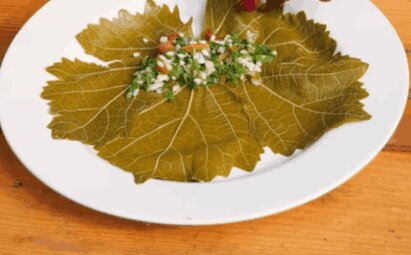
Roll the leaf tightly over the filling about one-third of the way up.
Fold both the left and right sides of the leaf inward toward the center, tucking them over the filling.
Continue rolling tightly all the way to the top of the leaf. The finished roll should be tight, slim (about 1/2 inch thick), and about 3 inches long. A tight roll is crucial—loose rolls will fall apart during cooking!
Step 6: Pack the grape leaves in the pot
As you finish rolling each grape leaf, place it seam-side down in the pot, arranging them tightly side by side in neat rows. When the first layer is complete, start a second layer directly on top, packing everything snugly. Depending on your pot size, you may have 2-4 layers. The tight packing prevents the rolls from unraveling during cooking.
Step 7: Add the cooking liquid
Sprinkle the remaining 1 teaspoon of salt over the packed grape leaves. Pour the remaining 3/4 cup lemon juice, remaining 1/2 cup olive oil, and 2 cups of water over everything. Gently tilt and rotate the pot from side to side to help the liquid seep through to the bottom. The liquid should just cover or almost cover the top layer of rolls. If it doesn’t, add a bit more water and lemon juice in equal parts.
Step 8: Weight down the grape leaves
Place a small, heatproof ceramic plate (or a heatproof dish that fits inside your pot) directly on top of the grape leaves. Press down firmly. This weights down the rolls and keeps them tightly packed and in place during cooking, preventing them from unraveling or floating up.
Step 9: Cook the grape leaves
Cover the pot with a lid. Bring to a boil over medium-high heat. Once boiling, reduce the heat to low and let simmer gently for 35-40 minutes. Every 10 minutes or so, carefully shake and gently swirl the pot to ensure the cooking liquid is evenly distributed and not pooling on one side.
Step 10: Check for doneness
After 35-40 minutes, carefully remove the lid and plate. The rice and chickpeas should be fully cooked and tender, and most of the liquid should be absorbed. The grape leaves should be very tender. If there’s still a lot of liquid and the rice isn’t tender, replace the plate and lid and cook for another 5-10 minutes.
Step 11: Let it rest (optional but recommended)
Turn off the heat and let the pot rest, uncovered, for 30 minutes to 1 hour. During this time, the rolls will absorb more of the flavorful sauce, and the flavors will intensify and meld together. This step also makes them easier to handle and serve.
Step 12: Serve
When ready to serve, place one gloved hand on the ceramic plate inside the pot to hold the rolls in place. Carefully pour off any remaining sauce into a separate container.
Place your serving platter upside down over the top of the pot. Holding the platter firmly against the pot with one hand and supporting the bottom of the pot with your other hand, quickly and confidently flip everything upside down. The grape leaves should fall perfectly onto the platter with the onion and tomato slices on top.
Serve warm or at room temperature with warm pita bread and a side of plain yogurt.
Additions and Substitutions
Grape leaves substitute: Fresh chard leaves, cabbage leaves, or even large spinach leaves can work, though the flavor will be different. Blanch them to soften before rolling.
Rice substitute: Short-grain or medium-grain rice works best, but you could try bulgur wheat for a different texture (though not traditional).
Chickpeas substitute: Dried lentils (whole, not split) can work, or you can omit them entirely and increase the rice slightly.
Fresh herbs substitute: If fresh mint isn’t available, use 2 tablespoons dried mint (though fresh is far superior). Cilantro can partially replace parsley if needed.
Lemon juice substitute: Use a combination of lemon and lime juice, or add a splash of white wine vinegar for tanginess.
Add protein: For a non-vegan version, add 1/2 lb ground lamb or beef to the filling and reduce rice accordingly.
Make it richer: Stir 1/4 cup pine nuts into the filling for extra richness and crunch.
Spice it up: Add a pinch of cinnamon, allspice, or cumin to the filling for warmth.
Make smaller rolls: For appetizer-sized portions, use less filling and make thinner rolls.
Make it in advance: Rolled grape leaves can be assembled and refrigerated uncooked for up to 24 hours before cooking.
How to Make Warak Enab or Lebanese Dolma at Home
My first experience rolling grape leaves was at my friend’s Lebanese grandmother’s house. She had invited the whole family over for a “rolling party,” and I had no idea what I was getting into. When I arrived, there were literally hundreds of grape leaves spread across the kitchen table, bowls of fragrant herby rice filling, and at least a dozen women (and a few brave men) sitting around chatting and rolling.
I was intimidated-everyone’s hands moved so quickly and confidently, producing perfect little rolls while carrying on conversations and sipping coffee. Mine, on the other hand, were fat, lumpy, and falling apart. The grandmother laughed kindly and came over to show me the technique: “Tight! Always tight! You roll like you’re making a baby swaddle, not a loose burrito!”
It took me about twenty attempts before I got the hang of it-the right amount of filling, how to fold the sides in just so, how to roll tightly without tearing the delicate leaves. But once I found the rhythm, it became almost meditative. Roll, fold, pack. Roll, fold, pack. The kitchen filled with the scent of fresh mint and lemon, and before I knew it, we had filled three huge pots.
What struck me most was how this dish embodies Lebanese hospitality and patience. No one makes just a dozen grape leaves-you make a hundred because you want enough to share with neighbors, send home with guests, and keep in the freezer for unexpected visitors. It’s a dish that requires time and care, but the result is something beautiful and deeply satisfying.
When the grape leaves finally came off the stove after simmering in that fragrant lemon sauce, they were tender, tangy, and absolutely delicious. We ate them at room temperature with thick yogurt, and I understood why Lebanese families have been making these for generations-they’re worth every minute of the rolling process.
Now when I make warak enab at home, I put on some music, pour myself something to drink, and embrace the slow, meditative process. Sometimes I rope friends or family into helping (promising them plenty of rolls to take home). The rolling might take an hour, but it’s an hour well spent.
Vegan Stuffed Grape Leaves Recipe FAQs
How do I prevent the grape leaves from tearing?
Use tender, pliable leaves (not old, tough ones). If using jarred leaves, soak them in hot water to soften. Handle them gently, and don’t overfill-too much filling causes tears. If a leaf tears, you can patch it with a piece of another leaf or simply use two leaves together.
Why do I need to roll them so tightly?
Tight rolling prevents the grape leaves from unraveling during cooking and ensures the filling stays inside. Loose rolls often fall apart when simmered, creating a messy pot of rice and torn leaves.
Can I use canned chickpeas instead of dried?
It’s not recommended. Canned chickpeas are already soft and will turn to mush during the 35-40 minute cooking time. Dried chickpeas (especially halved ones) maintain their texture and cook perfectly along with the rice.
How do I know when they’re done cooking?
The rice and chickpeas should be fully tender when you bite into a roll, most of the cooking liquid should be absorbed, and the grape leaves should be very soft and tender. If the rice is still hard or crunchy, cook longer.
Can I make these ahead of time?
Yes! You can roll them up to 24 hours in advance and refrigerate before cooking. Cooked grape leaves keep well in the fridge for up to 5 days and actually taste better the next day as the flavors develop.
Can I freeze stuffed grape leaves?
Absolutely! Freeze them either uncooked (arrange in layers with parchment between each layer) or fully cooked. Both freeze well for up to 3 months. Cook frozen uncooked rolls straight from the freezer, adding 10-15 minutes to cooking time. Thaw cooked ones in the fridge overnight and reheat gently.
What’s the difference between Lebanese warak enab and Greek dolmades?
Lebanese warak enab are typically rolled thinner and tighter than Greek dolmades, use more fresh herbs (especially mint), and often include chickpeas. Greek dolmades may use dill instead of mint, have a looser roll, and sometimes include pine nuts and raisins.
Want more delicious Lebanese vegetarian dishes?
Mujadara – Lentils and rice with caramelized onions, perfect alongside warak enab.
Lebanese Rice Pilaf – Fragrant rice with toasted vermicelli noodles.
Tabbouleh – Fresh parsley salad with bulgur and lemon.
Fattoush – Crispy bread salad with sumac dressing.
Hummus – Classic chickpea dip, essential for any mezze spread.
Baba Ganoush – Smoky eggplant dip with tahini.
Spinach Fatayer – Savory pastries filled with spinach and sumac.
What You Need
- Large mixing bowl
- Sharp knife or scissors
- Cutting board
- Deep, heavy-bottomed pot with lid
- Small heatproof ceramic plate (to fit inside pot)
Warak Enab Recipe (Lebanese Stuffed Grape Leaves)
Ingredients
Method
- Finely chop parsley, mint, tomatoes, and green onions.
- Mix the herbs and vegetables with rice, chickpeas, salt, olive oil, and lemon juice to make the stuffing.
- Prepare grape leaves by rinsing jarred leaves or blanching fresh ones until soft, then remove stems.
- Line the bottom of a pot with sliced onions and tomatoes to prevent sticking.
- Place stuffing in each grape leaf, roll tightly, and fold in the sides like a wrap.
- Arrange the rolls seam-side down in tight layers inside the pot.
- Add salt, lemon juice, olive oil, and water until the rolls are just covered.
- Place a plate on top to keep them from unrolling, then simmer on low heat for 35–40 minutes, shaking the pot occasionally.
- Check that the rice and chickpeas are tender and most of the liquid is absorbed.
- Let rest for 30–60 minutes for better flavor.
- Flip onto a serving platter and serve warm or room temperature with pita bread and yogurt.
Notes
- Calories: 392
- Fat: 29g
- Carbohydrates: 32g
- Fiber: 8g
- Protein: 6g
- Vitamin A: 13772 IU
- Vitamin C: 44mg
- Calcium: 206mg
- Iron: 3mg