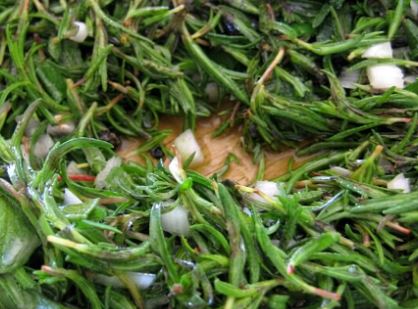
This green wild thyme salad, or salatat zaatar in Arabic, is one of those deeply evocative dishes in Lebanese. Fresh wild thyme leaves, dressed with nothing more than lemon juice, olive oil, and a touch of onion, create a salad that is pleasantly bitter and super healthy.
What is Salatat Zaatar?
Salatat zaatar translates literally to “thyme salad.” It’s a traditional Lebanese salad made from fresh, young wild thyme leaves – not dried thyme like you’d find in your spice cabinet, but tender, spicy leaves picked directly from wild-growing thyme plants.
Wild Thyme vs. Cultivated Thyme vs. Zaatar Spice
There’s often confusion about what “zaatar” actually means, as the word refers to multiple things:
Fresh wild thyme (zaatar akhdar): The fresh herb itself, growing wild in the Mediterranean hills. This is what’s used for this salad.
Zaatar spice blend: The famous Middle Eastern spice mixture made from dried wild thyme (or oregano), sumac, sesame seeds, and salt. This is what you spread on flatbread with olive oil for manakish.
Cultivated garden thyme: The common thyme (Thymus vulgaris) that grows in herb gardens worldwide. While related, it has a different, milder flavor than wild Mediterranean varieties.
For this salad, you want fresh zaatar – either wild-harvested or from a garden where you’ve specifically grown wild thyme varieties. If you can’t find true wild thyme, wide-leaf oregano (which is botanically very similar and sometimes even called “Syrian oregano” or “wild marjoram”) is the best substitute, as they have a similar flavor.
Lebanese Zaatar Salad Ingredients
This is one of the simplest recipes you’ll ever make – just five ingredients plus salt. The quality and freshness of each ingredient is paramount since there’s nowhere to hide. Here’s what you’ll need. For exact measurements, see the recipe card below.
Fresh Wild Thyme
Wild thyme (1 bunch): Look for young, tender plants with vibrant green leaves. The stems should be relatively soft, not woody. If you’re foraging wild thyme, harvest from clean areas away from roads or contaminated sites, and only take what you need, leaving plenty for the plants to regenerate.
The best wild thyme for salads comes from plants that haven’t yet flowered. Once the plants bloom, the leaves become tougher and more intensely bitter. You want the tender growing tips and the youngest leaves.
How to identify wild thyme: Wild thyme grows low to the ground in bushy mounds. The leaves are small, oval-shaped, and intensely aromatic when crushed. The whole plant smells powerfully of thyme – you can’t miss it. If you’re in the Mediterranean or similar climates, look for it growing on rocky hillsides, between stones, and in sunny, well-drained areas.
Substitutes if you can’t find wild thyme:
- Wide-leaf oregano (sometimes called Greek oregano or Syrian oregano) – this is the best substitute
- Fresh garden thyme – will work but has a milder, different flavor
- Young oregano leaves – very close in flavor profile
- Fresh marjoram – milder but pleasant
Growing your own: Wild thyme can be cultivated in gardens or containers in moderate to warm climates. It loves sun, well-drained soil, and doesn’t need much water once established. It’s actually quite easy to grow and will spread to form an aromatic ground cover.
Spices and Dressing
Small onion (1 very small, yellow or white, finely chopped): The onion should be finely minced – we’re talking tiny pieces. It provides a sharp, pungent counterpoint to the herbaceous thyme. Use a small onion or even half of a medium onion – you want onion flavor without it overpowering the delicate thyme.
Green onions (⅓ bunch, finely chopped): Also called scallions. Use both the white and light green parts, finely sliced. Green onions add a milder, sweeter onion flavor that complements the sharper white onion.
Fresh lemon juice (from 1 lemon): This must be fresh – bottled lemon juice simply doesn’t have the bright, clean acidity of fresh. The lemon juice is crucial – it brightens the flavors, balances the bitterness of the thyme, and helps “cook” the onions slightly to mellow their rawness.
Extra virgin olive oil (2 teaspoons): Use your best olive oil here. With so few ingredients, quality really matters. A fruity, peppery Lebanese or Greek olive oil would be ideal. The amount is deliberately small – this is a light dressing that coats rather than drowns the leaves.
Salt (a dash): Just a pinch to enhance flavors. Wild thyme already has a strong flavor, so you don’t need much salt.
How to Make Salatat Zaatar Step-By-Step
This recipe is more about careful preparation than cooking – there’s no cooking involved at all. The key is in properly preparing the wild thyme and balancing the dressing. The entire process takes about 10-15 minutes.
Preparing the Wild Thyme
Step 1: Rinse the wild thyme thoroughly under cold running water. Wild-harvested herbs can have dirt, dust, or small insects, so a good rinse is important. Swish the thyme around in a bowl of water if it’s particularly dirty, changing the water until it runs clear.
Step 2: Shake off excess water and lay the thyme out on clean kitchen towels. Pat dry gently. It’s important that the thyme is completely dry before you pick the leaves – wet leaves won’t hold the dressing well and will dilute the flavors.
Step 3: This is the most time-consuming but meditative part: hand-pick the tiny green leaves from the stems. Focus on the tender leaves at the growing tips and along the upper portions of the stems. These are the most tender and least bitter.
Step 4: Discard the stems – they’re too tough and woody for salad. Some people save them to dry for tea or to add to stocks and broths for flavoring, but they’re not eaten in the salad.
Why hand-pick? You might be tempted to chop the whole thing or use a stripping tool, but hand-picking ensures you’re selecting only the most tender leaves and avoiding the tough, woody parts.
Preparing the Spices
Step 5: Peel and very finely chop the small onion. You want tiny, uniform pieces that will distribute throughout the salad rather than large chunks that dominate any given bite. A sharp knife is essential – dull knives crush the onion rather than cutting it cleanly, releasing more of those tear-inducing compounds and making the onion taste harsher.
Step 6: Finely chop both the white and light green parts of the green onions. Slice them thin – about ⅛ inch or less. The finer you chop, the more evenly the onion flavor will distribute.
Step 7: If your onions are particularly pungent and you want to mellow them slightly, you can soak the chopped onions in ice water for 5-10 minutes, then drain and pat dry. This removes some of the sharp bite. However, many Lebanese people prefer the full, robust onion flavor, so this step is optional.
Making the Salad
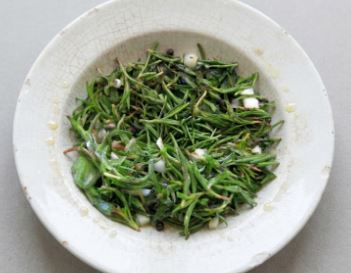
Step 8: In a serving bowl, combine the picked wild thyme leaves, chopped white onion, and chopped green onions.
Step 9: Squeeze the fresh lemon juice directly over the salad. Use all the juice from one lemon – the acidity is important for balancing the bitterness of the thyme and mellowing the onions.
Step 10: Drizzle the olive oil over the salad. Two teaspoons might seem like very little, but remember, this is a light, refreshing salad, not a heavy one. The oil should lightly coat the leaves, not pool at the bottom of the bowl.
Step 11: Add just a pinch or dash of salt. Start conservative – you can always add more, but you can’t take it away.
Step 12: Using your hands or salad tongs, gently toss everything together until the thyme leaves and onions are evenly coated with the lemon juice and olive oil. Massage the dressing into the leaves slightly to help them absorb the flavors.
Step 13: Taste and adjust. Does it need more lemon for brightness? More salt to bring out the flavors? A touch more olive oil for richness? Adjust to your preference.
Step 14: Let the salad sit for 5 minutes before serving if you have time. This allows the flavors to meld and the lemon juice to slightly “cook” and mellow the onions.
How to Serve Salatat Zaatar
This salad is traditionally served as part of a mezze spread or alongside main meals, but there are specific ways Lebanese people typically enjoy it:
With pita bread: The most traditional way. Scoop the salad onto a piece of pita bread, fold it up, and eat like a taco. The bread provides a neutral base that balances the intense flavors.
As a side salad: Serve alongside grilled meats, particularly lamb or chicken.
With cheese: Pair with labneh (strained yogurt), halloumi, or white cheese. The creamy, salty cheese beautifully complements the sharp, herbaceous salad.
In a mezze spread: Serve as one of several small salads and dips, alongside tabbouleh, fattoush, hummus, and baba ganoush.
With rich foods: Because of its digestive properties and palate-cleansing quality, serve it alongside fatty or rich dishes like fried foods, kebabs, or heavy stews.
For breakfast: In Lebanese villages, this salad is sometimes eaten for breakfast with pita bread, olives, and tea.
If you’re looking for other traditional appetizers or desserts, you might want to try out Maakaroun or the Lebanese Avocado Cocktail.
Frequently Asked Questions
Can I use dried thyme instead of fresh?
No, this recipe absolutely requires fresh thyme. Dried thyme has a completely different texture and flavor profile. This salad is all about the fresh, vibrant quality of young thyme leaves.
Why is my salad very bitter?
Wild thyme is naturally somewhat bitter, but excessive bitterness usually means the leaves are too mature or woody. Use only the youngest, most tender leaves from the growing tips. Also, make sure you’re using enough lemon juice to balance the bitterness.
Can I use regular garden thyme?
You can, though the flavor will be milder and different from authentic wild thyme. Use the most tender leaves and increase the quantity since they’re less intensely flavored.
How much is “a bunch” of wild thyme?
About a large handful of fresh stems, which will yield approximately 1-1½ cups of picked leaves. The exact amount isn’t critical – adjust the other ingredients proportionally.
Is this the same as the zaatar spice I put on flatbread?
No, though they’re related. This salad uses fresh wild thyme leaves. The zaatar spice blend is made from dried thyme (or oregano) mixed with sumac, sesame seeds, and salt. Completely different preparations, though they start with the same plant.
Why does it need both regular onion and green onion?
They provide different flavor notes – regular onion gives sharp pungency, while green onions add a milder, sweeter note. Together they create a more complex onion flavor, but you could use just one if needed.
Lebanese Zaatar Salad
Ingredients
Method
- Wash well, dry, and pick off the leaves.
- Place the thyme in a bowl. Then add in your chopped onions.
- Add lemon juice, olive oil, and salt.
- Mix gently until everything is coated.
- Let it sit for 5 minutes, then serve fresh.
Notes
- Use tender leaves to reduce bitterness
- Add more lemon if you want a brighter taste
- If thyme isn’t available, use fresh oregano or thyme
- Best eaten fresh (within a few hours)
Leave a Reply