Macaroon bi toum (also spelt as maacaron) is a traditional Lebanese dish of handmade wheat noodles mixed together with garlic lemon sauce. The name comes from the Italian “maccheroni” (macaroni) and the Arabic “toum” (garlic), reflecting the cross-cultural influences peculiar to Lebanese cuisine.
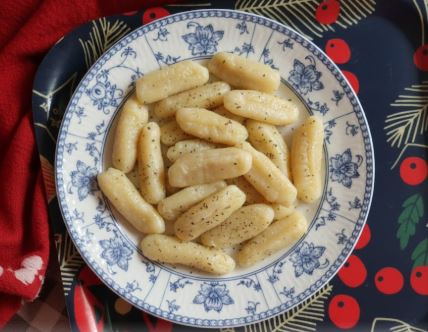
This dish has its origin in the mountain villages of Lebanon, where it was traditionally prepared by farmers and villagers using the most basic pantry staples: flour, garlic, lemon, and olive oil. In these mountain communities, food was about sustenance and making the most of what was available locally. Garlic and lemons grew abundantly, while wheat was milled into flour for daily bread and noodles.
What Is Toum (Lebanese Garlic Sauce)?
Before we dive into the recipe, it’s worth understanding toum, the garlic sauce we will be using for the dish. Toum is one of Lebanon’s popular condiments, made from just garlic, salt, lemon juice, and oil. It’s similar to aioli, but traditional toum contains no egg – instead, the garlic itself acts as the emulsifier, creating a thick, white sauce.
The key to successful toum is patience and technique. The garlic must be crushed very finely, and the oil must be added extremely slowly while blending continuously. When done correctly, the sauce transforms from a wet garlic paste into a light, airy, almost mayonnaise-like consistency.
For maacaron bi toum, we use a slightly looser version of toum with more lemon juice, creating a sauce that’s more like a thin paste or glaze rather than the thick, spreadable condiment served with grilled meats.
Macaroon bi Toum Ingredients
Here are all the ingredients and important notes about them. For amounts, see the full recipe card below. Macaroon bi toum has three components: the handmade noodles, the garlic sauce, and the potatoes that cook alongside the noodles.
Handmade Noodle Ingredients
All-purpose flour. You’ll need 1 lb (about 3½ cups) of general-purpose flour. Lebanese mountain cooks would traditionally use locally milled wheat flour, which might be slightly coarser than modern all-purpose flour, but standard all-purpose works perfectly. Don’t use bread flour—the higher protein content will make the noodles too chewy.
Yeast. Just ¼ teaspoon of active dry yeast is used. Unlike bread, we’re not looking for a significant rise here – the yeast just adds a subtle flavor and helps create a slightly more tender texture in the finished noodles. Some traditional recipes omit yeast entirely, so if you don’t have any, you can skip it.
Salt. Essential for flavoring the dough. You’ll use about 1 teaspoon in the dough itself, plus more for the cooking water.
Water. About 200 ml (roughly 1 cup) of water is needed to bring the dough together. The water should be room temperature or slightly warm if using yeast.
Garlic Sauce (Toum) Ingredients
Garlic. This is where maacaron bi toum earns its reputation. You’ll need 15 cloves of fresh garlic. Use fresh garlic cloves only; pre-minced garlic from a jar will not work for this recipe. The garlic should be firm and fresh with no green sprouts (which can add bitterness). Don’t even think about reducing the amount of garlic – that would miss the entire point of the dish.
Fresh lemon juice. Use ½ cup of freshly squeezed lemon juice. Bottled lemon juice is not acceptable here—the fresh, bright acidity is essential to the character of the dish and helps balance the pungent garlic. You’ll need about 3-4 lemons, depending on their juiciness.
Extra virgin olive oil. Good quality olive oil makes a difference here since it’s a main component of the sauce. You’ll need ½ cup. Lebanese extra virgin olive oil would be ideal, but any high-quality extra virgin olive oil works. The oil should have a good flavor since it’s not being cooked.
Salt. About ⅔ teaspoon of salt goes into the garlic sauce to season it and help with the emulsification process.
Additional Ingredients
Potatoes. Two medium potatoes, peeled and cut into small cubes, are cooked alongside the noodles. This is a traditional addition that makes the dish more substantial and adds another texture. The potatoes also help absorb some of the intense garlic flavor, making the dish slightly more approachable. You can use any starchy potato—russet, Yukon gold, or similar.
Olive oil for cooking water. A teaspoon of olive oil added to the boiling water helps prevent the noodles from sticking together.
How to Make the Toum Pasta
I highly recommend watching a video tutorial if this is your first time making these noodles – seeing the hand motion makes it much easier to understand.
For the Noodle Dough
- If using yeast, dissolve it in a small cup with a tablespoon of warm water. Let it sit for a few minutes until it becomes slightly foamy. This activates the yeast.
- In a large mixing bowl, combine the flour and 1 teaspoon of salt. Make a well in the center and add the dissolved yeast (or just plain water if omitting yeast) and about 200 ml (1 cup) of room temperature water.
- Mix with your hands or a wooden spoon until the dough starts to come together. Then knead by hand for about 5 minutes until you have a smooth, elastic dough. The dough should be soft but not sticky. If it’s too dry and won’t come together, add water a tablespoon at a time. If too sticky, add a bit more flour.
- Cover the dough with a clean kitchen towel and let it rest for 20-30 minutes. This resting period allows the gluten to relax, making the dough easier to work with. In a warm room, 20 minutes is sufficient; in a cooler room, give it 30 minutes.
Forming the Noodles
- After the dough has rested, lightly flour your work surface. Pinch off a portion of dough about the size of a golf ball and roll it between your palms and the counter to form a long “snake” about ½ to ⅔ inch in diameter. The thickness should be consistent along the length.
- Using a knife or bench scraper, cut the dough snake into pieces about 2 inches long. Don’t worry about making them perfectly uniform – handmade noodles should look rustic.
- Now comes the distinctive shaping technique: Take one piece of cut dough and place it on your work surface. Using your index finger, press down on the center of the dough piece and roll it toward yourself while applying gentle pressure. This creates a wedge or groove running through the middle of the noodle. The motion is kind of like rolling a cigarette or making gnocchi, if you’re familiar with those techniques.
- The goal is to create an indentation that goes nearly through the noodle. This wedge serves two purposes: it helps the thick noodles cook evenly all the way through, and it creates a little pocket that will catch the garlic sauce. Continue forming all the noodles in this way and set them aside on a lightly floured surface or tray.
For the Garlic Sauce
- Peel all 15 garlic cloves. For easier peeling, you can smash them lightly with the flat side of a knife, which loosens the skins.
- Add the garlic cloves and ⅔ teaspoon of salt to a food processor or high-powered blender. Process until the garlic is very finely minced – almost a paste. Stop and scrape down the sides as needed to ensure even processing.
- With the food processor running on medium speed, begin adding the lemon juice and olive oil in a very slow, thin stream, alternating between the two. Start with a small amount of lemon juice, then a small amount of oil, then more lemon juice, then more oil. The key is to add the liquids slowly and steadily while the processor is running continuously. This gradual addition allows the garlic to emulsify the oil and lemon juice into a cohesive sauce.
- Continue until all the lemon juice and oil are incorporated. The final sauce should be smooth, creamy, and pale in color – somewhere between a thick liquid and a thin paste. It should pour slowly off a spoon and coat the back of the spoon. If the sauce seems too thick, you can add a tablespoon or two of water to loosen it. If it’s too thin, you can add a bit more oil while blending.
Cooking the Noodles
- Fill a large pot with several cups of water (enough to comfortably cover the noodles and potatoes). Add 1 teaspoon of salt and 1 teaspoon of olive oil. Bring to a full, rolling boil over high heat.
- Add the cubed potatoes to the boiling water and cook for about 5 minutes to give them a head start, as they take longer to cook than the noodles.
- Lower the heat to maintain a gentle boil (not a violent rolling boil, which could break apart the noodles). Add the handmade noodles one handful at a time, stirring gently after each addition to prevent sticking. Don’t overcrowd the pot—if necessary, cook the noodles in batches.
- Cook for 20-25 minutes, stirring occasionally, until the noodles are tender all the way through and the potatoes are fully cooked. The noodles should be soft and cooked through, but still have some structure – they shouldn’t be mushy. To test, remove one noodle and cut it in half; there should be no raw flour taste, and the texture should be uniform throughout.
Assembly and Serving
- When the noodles and potatoes are cooked, drain them thoroughly in a colander. Give them a good shake to remove excess water, but don’t rinse them – you want them to stay hot.
- Immediately transfer the hot, drained noodles and potatoes to a large serving bowl. While they’re still very hot, add all of the garlic sauce and toss vigorously to coat every piece. The heat from the noodles will help the sauce become more fluid and distribute evenly. Toss for a good minute or two to ensure everything is well coated.
- Serve immediately while hot. Maacaron bi toum is traditionally served as a main course alongside a fresh, acidic salad like fattoush to help balance the richness and intensity of the garlic. The crunchy, tangy salad provides essential contrast to the soft, garlicky noodles.
Frequently Asked Questions
What’s the difference between Toum and Aioli?
While toum and aioli are often compared, they’re not quite the same. Aioli is a Provençal sauce that traditionally contains garlic, salt, and olive oil emulsified with egg yolk. The egg makes aioli more stable and easier to prepare. Toum, on the other hand, relies entirely on the garlic for emulsification- no eggs involved. This makes toum completely vegan, but also more temperamental to prepare. The technique requires more precision, but the result is a lighter sauce with a cleaner, more intense garlic flavor.
Can I use a mortar and pestle instead of a food processor for the garlic sauce?
Absolutely! In fact, traditional toum was always made in a mortar and pestle. It takes more time and elbow grease, but many people prefer the texture and flavor of hand-pounded garlic. The technique is the same: crush the garlic with salt until it forms a smooth paste, then gradually add the oil and lemon juice in tiny amounts while continuously pounding and stirring.
Can I reduce the amount of garlic?
Technically yes, but I would urge you not to. The entire point of maacaron bi toum is the intensity of the garlic. If you’re not ready for that level of garlic, this might not be the right dish for you. That said, if you absolutely must reduce it, I wouldn’t go below 10 cloves—any less and you’re no longer making authentic maacaron bi toum.
What if my garlic sauce doesn’t emulsify?
If your garlic sauce separates or doesn’t come together properly, don’t panic. Start fresh with 2-3 new garlic cloves in a clean food processor. Process them with a pinch of salt until smooth, then very slowly drizzle in your separated sauce while the processor is running. This often rescues the emulsion. The key to preventing this in the first place is adding the oil and lemon juice very slowly—patience is essential.
Can I make this with store-bought pasta?
You could, but it wouldn’t really be maacaron bi toum anymore. Part of the dish’s identity is the thick, handmade noodles with their characteristic wedge. If you’re short on time, you could use a thick, short pasta shape like cavatelli or penne, but understand that it’s a different dish. The handmade noodles are worth the effort—they’re easier than you think once you get the motion down.
What should I serve with maacaron bi toum?
Traditionally, maacaron bi toum is served with fattoush (Lebanese salad with sumac and pita chips) or another fresh, acidic salad. The crunch and tartness of the salad are essential to balance the rich, garlicky noodles. Other good accompaniments include tabbouleh, a simple tomato and cucumber salad, or pickled vegetables.
Macaroon bi Toum Pasta
Ingredients
Method
- In a small cup, dissolve the yeast in about 1 tablespoon of warm water. Let it sit for a few minutes until slightly foamy to activate the yeast.
- In a large mixing bowl, combine the flour and 1 teaspoon of salt. Make a well in the center and add the dissolved yeast and about 200 ml (1 cup) of room temperature water.
- Mix with your hands until the dough starts to come together, then knead by hand for about 5 minutes until you have a smooth, elastic dough. The dough should be soft but not sticky. Adjust with more water or flour as needed.
- Cover the dough with a clean kitchen towel and let it rest for 20-30 minutes (20 minutes in a warm room, 30 minutes in a cooler room).
- Lightly flour your work surface. Pinch off a golf ball-sized portion of dough and roll it between your palms and the counter to form a long “snake” about ½ to ⅔ inch in diameter.
- Using a knife or bench scraper, cut the dough snake into pieces about 2 inches long.
- Take one piece of cut dough and place it on your work surface. Using your index finger, press down on the center of the dough piece and roll it toward yourself while applying gentle pressure.
- Continue forming all the noodles in this way and set them aside on a lightly floured surface or tray.
- Peel all 15 garlic cloves. (You can lightly smash them with the flat side of a knife to make peeling easier.)
- Add the garlic cloves and ⅔ teaspoon of salt to a food processor. Process until the garlic is very finely minced, almost a paste. Scrape down the sides as needed.
- With the food processor running on medium speed, begin adding the lemon juice and olive oil in a very slow, thin stream, alternating between the two. Start with a small amount of lemon juice, then a small amount of oil, then more lemon juice, then more oil.
- Continue until all the lemon juice and oil are incorporated. The sauce should be smooth, creamy, and pale – somewhere between a thick liquid and a thin paste. If too thick, add 1-2 tablespoons of water. If too thin, add a bit more oil while blending.
- Fill a large pot with several cups of water. Add 1 teaspoon of salt and 1 teaspoon of olive oil. Bring to a full, rolling boil over high heat.
- Add the cubed potatoes to the boiling water and cook for about 5 minutes to give them a head start.
- Lower the heat to maintain a gentle boil. Add the handmade noodles one handful at a time, stirring gently after each addition to prevent sticking.
- Cook for 20-25 minutes, stirring occasionally, until the noodles are tender all the way through and the potatoes are fully cooked.
- When the noodles and potatoes are cooked, drain them thoroughly in a colander. Shake well to remove excess water but don’t rinse.
- Immediately transfer the hot, drained noodles and potatoes to a large serving bowl. While they’re still very hot, add all of the garlic sauce and toss vigorously for 1-2 minutes to coat every piece evenly.
- Serve immediately while hot, alongside fattoush or another fresh salad.
Notes
- Large mixing bowl
- Food processor or high-powered blender
- Large pot for boiling
- Rolling surface
- Sharp knife or bench scraper
Leave a Reply