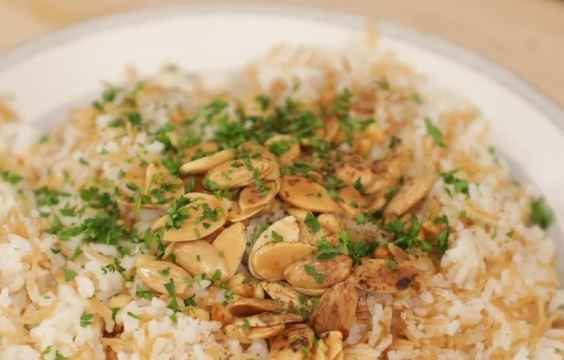
The Lebanese Almond Rice is a traditional roz bil lauz made with simple ingredients and a perfect side dish for grilled meats, stews, and everything in between.
What Is Lebanese Almond Rice?
Lebanese almond rice (roz bil lauz) is a popular side dish and part of the broader family of Lebanese rice pilaf (roz bi sh’arieh), where rice is cooked with toasted vermicelli noodles in butter or oil. But this version takes it further with the addition of toasted almonds that add both visual appeal and delicious nutty crunch.
What makes Lebanese rice distinctive from plain steamed rice is the technique of toasting vermicelli noodles (thin pasta broken into small pieces) in butter until golden brown before adding the rice.
The almonds in this recipe serve multiple purposes. They add visual appeal (making this suitable for special occasions), improves texture by making it crunchy, and contribute a rich, buttery flavor that complements the toasted vermicelli. Some cooks toast the almonds with the vermicelli, while others toast them separately and scatter them on top as garnish – both methods work well.
If you love this Lebanese almond rice recipe, you’ll probably also enjoy Lebanese Vermicelli Rice (the simpler version without almonds), Hashweh (spiced rice with ground meat and nuts), Mujadara (lentils and rice with caramelized onions), Makloubeh (upside-down rice with vegetables and meat), and of course, serving it alongside Grilled Chicken, Chicken Shawarma, or Kafta Kebabs.
Why You’ll Love This Lebanese Almond Rice Recipe
Simple but impressive – Easy enough for weeknight dinners but elegant enough for special occasions
Perfect texture every time – The technique creates fluffy, separate grains with a beautiful golden color from the toasted vermicelli
Incredibly versatile – Pairs beautifully with other sources of protein, from grilled meats to vegetarian stews
Lebanese Almond Rice Ingredients
Here’s what you will need to make this recipe:
Rice
2 cups long-grain white rice – Basmati rice is ideal for Lebanese rice pilaf because it stays fluffy with separate grains. Regular long-grain white rice also works beautifully. Avoid short-grain or sticky rice varieties—you want rice that stays light and fluffy, not clumpy. The rice should be rinsed thoroughly before cooking to remove excess starch.
Vermicelli
1/2 cup vermicelli noodles (broken into small pieces) – These thin pasta strands are essential to authentic Lebanese rice. You’ll break them into roughly 1/2 to 1-inch pieces. Look for the thinnest vermicelli you can find (sometimes labeled as angel hair pasta in Western stores). The vermicelli toasts to golden brown in butter, adding beautiful color, toasted flavor, and textural variety to the rice.
Fat
4 tablespoons butter (or ghee) – Butter is traditional and adds rich flavor. Some Lebanese cooks use ghee (clarified butter) or a combination of butter and olive oil. The butter is what toasts the vermicelli and almonds to golden perfection and coats each grain of rice with silky richness.
Almonds
1/2 cup sliced or slivered almonds – These can be added in two ways: toasted with the vermicelli for integrated flavor throughout, or toasted separately and sprinkled on top as garnish. Sliced almonds are traditional, but you can also use slivered or even whole almonds that you’ve roughly chopped. Make sure they’re unsalted!
Liquid
3 cups water or chicken broth – The general ratio is 1.5 cups liquid to 1 cup rice when using the absorption method. Water works perfectly fine, but chicken broth (or vegetable broth) adds extra depth and savory flavor. Some cooks use a combination of both.
Seasoning
1 teaspoon salt (or to taste) – Essential for bringing out all the flavors. If using salted broth, reduce the added salt accordingly. Start with less and adjust after tasting.
Optional additions
1/4 teaspoon ground cinnamon – A tiny pinch adds warmth and subtle sweetness that complements the almonds beautifully. Very traditional in some Lebanese households.
1 bay leaf – Adds aromatic depth while the rice cooks. Remove before serving.
2 tablespoons pine nuts – Some cooks add pine nuts along with (or instead of) almonds for extra richness.
Additions and Substitutions
Rice substitute: Jasmine rice works well, as does any long-grain white rice. Brown rice can be used but will require more liquid (4 cups) and longer cooking time (40-45 minutes).
Vermicelli substitute: You can use angel hair pasta broken into small pieces, or thin spaghetti broken up. Orzo (rice-shaped pasta) can work, but will look different. In a pinch, you can make the rice without vermicelli, though it won’t be traditional.
Butter substitute: Ghee (clarified butter) is wonderful and very traditional. Olive oil can be used for a dairy-free version, or use a combination of olive oil and butter for the best of both worlds.
Almonds substitute: Pine nuts are the most traditional alternative (often used in hashweh rice). Cashews, pistachios, or walnuts can also work. Omit nuts entirely for plain vermicelli rice.
Broth substitute: Water is perfectly fine! For vegetarian/vegan, use vegetable broth. For extra richness, use half broth and half water.
Add vegetables: Some cooks add frozen peas in the last 5 minutes of cooking for color and nutrition. Diced carrots can be sautéed with the vermicelli.
Make it fancy (hashweh-style): Add 1/2 lb ground lamb or beef browned with the vermicelli, plus warm spices like cinnamon, allspice, and black pepper.
Add aromatics: A small diced onion sautéed with the vermicelli adds sweetness and depth.
Saffron rice: Add a pinch of saffron threads soaked in 2 tablespoons of warm water to the cooking liquid for a beautiful golden color and luxurious flavor.
Extra crispy topping: Toast extra almonds and vermicelli separately until very crispy and use as garnish on top for added crunch.
How to Make Lebanese Almond Rice (Roz bil Lauz)
I learned to make proper Lebanese rice from my friend’s mother during a visit to their family home. I’d been making rice for years—how hard could it be? But when I watched her transform simple rice into something magical by toasting vermicelli in butter until golden brown, I realized I’d been missing out.
The first lesson was patience. She stressed that the vermicelli needed to be toasted to a deep golden brown, not just lightly colored. “This is where the flavor comes from,” she explained, stirring constantly and watching like a hawk. “Too light and it tastes bland. Too dark and it’s bitter. Just right, and the whole rice becomes fragrant.”
The second lesson was the importance of good ingredients. She used real butter (not margarine), quality basmati rice that she rinsed three times, and whole almonds she sliced herself that morning. “Cooking is simple,” she said, “but simple means you can’t hide behind complexity. The ingredients have to be good.”
The third lesson was the technique. Once the liquid was added and brought to a boil, the lid went on and didn’t come off. No peeking, no stirring, no checking. “The steam must stay inside,” she insisted. “Every time you lift the lid, you let out steam and the rice won’t cook evenly.”
When we finally opened the pot after the resting period, the rice was absolutely perfect—fluffy, with each grain separate, golden vermicelli scattered throughout like little treasures, and toasted almonds adding pops of crunch. We served it alongside grilled kafta kebabs, and I understood why Lebanese rice is never just plain rice.
Now when I make Lebanese almond rice at home, I hear her voice reminding me to toast until deeply golden, to resist the urge to peek, and to use good butter. These small details make all the difference between ordinary rice and rice that people actually talk about.
I’ve served this rice at dinner parties where people have asked for the recipe (it’s always a surprise when they learn how simple it is), packed it in lunch boxes where it holds up beautifully even cold, and made it countless times as a weeknight side dish that makes even simple grilled chicken feel special.
Frequently Asked Questions
What type of rice is best for Lebanese rice?
Long-grain rice like basmati or regular long-grain white rice works best. These varieties stay fluffy with separate grains rather than sticky. Basmati is preferred for its aromatic quality and perfect texture, but any quality long-grain rice will work beautifully.
Do I have to use vermicelli?
Vermicelli is traditional and essential to authentic Lebanese rice pilaf. It adds toasted flavor, visual appeal, and textural variety. However, if you can’t find vermicelli, you can use broken angel hair pasta or thin spaghetti. You can also make rice without it, though it won’t be traditional roz bi sh’arieh.
Can I use brown rice?
Yes, but you’ll need to adjust the liquid and cooking time. Use 4 cups liquid instead of 3, and cook for 40-45 minutes instead of 15-18 minutes. The texture and flavor will be different from traditional Lebanese rice, but it’s a healthy alternative.
Why do you toast the vermicelli and almonds first?
Toasting in butter creates deep, nutty, caramelized flavors that simple boiling can’t achieve. It also gives the vermicelli that beautiful golden color that makes Lebanese rice so distinctive. This step is crucial and shouldn’t be skipped!
Can I make this ahead of time?
Yes! You can make it several hours ahead and keep it warm in the covered pot on the lowest heat setting. You can also make it a day ahead, refrigerate, and reheat in the microwave or on the stovetop with a splash of water. It freezes well for up to 3 months.
Why is my rice sticky or mushy?
This usually means the rice wasn’t rinsed enough (excess starch makes rice sticky), too much liquid was used, or the rice cooked too long. Make sure to rinse until the water runs clear, use the proper 1.5:1 liquid-to-rice ratio, and don’t overcook.
Can I make this in a rice cooker?
Yes! Toast the vermicelli, almonds, and rice in butter on the stovetop first, then transfer everything to your rice cooker. Add the liquid and cook on the white rice setting. It works beautifully.
What should I serve with Lebanese almond rice?
This rice is incredibly versatile! It pairs beautifully with grilled meats (chicken, lamb, beef kebabs), stews (bazella, fasolia, okra stew), roasted vegetables, or even just with yogurt and a simple salad. It’s the perfect side dish for Middle Eastern meals.
Can I make this vegan?
Absolutely! Replace the butter with olive oil or vegan butter, and use vegetable broth instead of chicken broth. It will still be delicious, though the flavor will be slightly different from the traditional butter-based version.
How do I prevent burning the vermicelli?
Use medium heat (not high), stir constantly, and watch carefully. The vermicelli can go from golden to burnt very quickly. If it’s browning too fast, reduce the heat. Don’t multitask during this step—give it your full attention for those 3-5 minutes.
Want more delicious Lebanese rice dishes and sides?
Lebanese Vermicelli Rice (Roz bi Sh’arieh) – The simpler version without almonds, equally delicious.
Hashweh – Spiced rice with ground meat, pine nuts, and almonds.
Mujadara – Lentils and rice with crispy caramelized onions.
Makloubeh – Upside-down rice with eggplant, cauliflower, and meat.
Lebanese Rice Pudding – Creamy rice dessert with orange blossom water.
Fattoush Salad – Crispy bread salad perfect alongside rice.
Grilled Kafta – Ground meat kebabs that pair perfectly with this rice.
Lebanese Almond Rice Recipe
Ingredients
Method
- Rinse the rice under cold water until clear, then drain and set aside.
- Break the vermicelli into small pieces and set aside.
- Melt the butter in a pot over medium heat, then add the vermicelli and almonds. Stir until golden and fragrant, about 3–5 minutes.
- Add the rice and stir to coat well. Cook for 1–2 minutes.
- Pour in the water or broth, add salt and any optional spices, and stir once.
- Bring to a full boil over medium-high heat.
- Reduce heat to low, cover, and cook for 15–18 minutes without lifting the lid.
- Turn off the heat and let it sit, covered, for 5 minutes.
- Remove the lid, discard the bay leaf if used, and fluff with a fork.
- Serve warm, topped with extra almonds if desired.
Leave a Reply