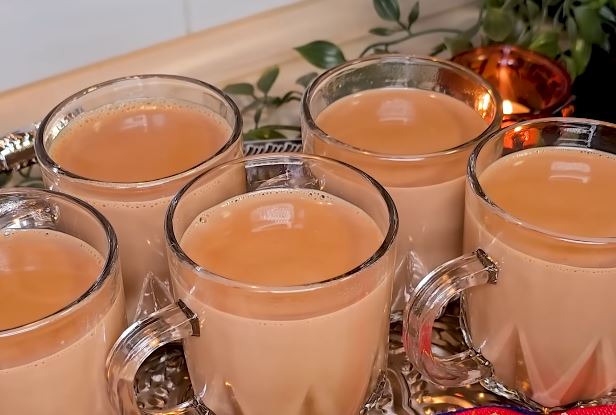
Thick, caramel-colored, milky, and warm with cardamom and a whisper of saffron – karak chai is the most comforting cup of tea you will ever make. This is the version I came back to after testing more iterations than I care to admit, and it is exactly right.
What is karak chai?
Karak chai (كرك چاي), also written chai karak, or simply karak, is a strong, spiced milk tea that originated in India and became one of the most beloved everyday drinks across the Gulf states: Qatar, Bahrain, the UAE, Saudi Arabia, and beyond. The word “chai” comes from the Persian “chay,” meaning tea, and “karak” refers to the strength and concentration of the brew.
Think of it as the Gulf’s answer to Indian masala chai – deeply brewed black tea simmered with milk and spices until thick, sweet, and fragrant, but with a lighter hand on the spice, which lets the caramelized sweetness and the cardamom come forward without overwhelming everything else.
If you have encountered karak outside the Gulf, it is increasingly appearing in cafés and restaurants around the world – Dishoom in London has introduced it to thousands of people who had never heard of it before. But nothing beats making it at home.
Why you’ll love this recipe
I’ll be transparent with you: I tested a lot of versions of this recipe. I scoured the internet, asked my followers on Instagram, and made pot after pot until I landed on the balance I was looking for – not too sweet, not too spiced, not too strong.
The caramelizing of the sugar before anything else goes in is the step that sets this recipe apart. It adds a subtle toffee depth to the tea that you cannot achieve by simply dissolving sugar in water, and it is what gives karak its characteristic amber color.
The first time I made it with caramelized sugar, I brought two cups to the table, and my husband looked at me and said “this is the one.” We have not changed the recipe since.
Karak Chai Ingredients
Sugar:
White sugar, caramelized in the pot before any liquid is added. This single step transforms the flavor — the sugar turns from sweet to something deeper and more complex, with a faint bitterness that balances the richness of the milk.
You can skip the caramelizing and simply dissolve the sugar in hot water if you are in a hurry, and it will still be a very good karak. But the caramelized version is the one worth making when you have five extra minutes.
Black tea:
Loose leaf black tea is traditional — in the Gulf, Lipton Red Label and similar strong breakfast teas are the standard. Tea bags work perfectly well and are what most home cooks use. The tea needs to be strong and bold enough to hold its own against the milk and spices.
Cardamom:
The undisputed star of karak. Whole cardamom pods — not ground — give a cleaner, more aromatic flavor that infuses the tea without turning it bitter. Six pods for four cups is my number. You can find cardamom-flavored evaporated milk in Middle Eastern grocery stores, which is a lovely shortcut; if you use it, halve the cardamom pods.
Cloves:
Just three whole cloves add a warm, slightly sharp depth that you do not notice consciously but would immediately miss. Do not be tempted to add more — cloves can overpower very quickly.
Saffron:
A tiny pinch — literally five or six threads — for a fragrance and color contribution that is subtle but unmistakable. Saffron in karak is not about flavor so much as atmosphere. It lifts the whole cup into something that feels genuinely special.
Ginger:
Three slices of fresh ginger root, which add warmth without heat. If you are not a ginger fan, leave it out entirely. If you love it, lean into it — a few more slices will not hurt anything.
Evaporated milk:
This is what makes karak karak rather than just spiced tea. Evaporated milk is thick, creamy, and unsweetened, which means you control the sweetness entirely through the sugar. One small can for four cups gives a properly rich, caramel-colored tea. Add more if you like it creamier. Regular whole milk works in a pinch but produces a thinner result.
How to make it
Place the sugar in a medium saucepan over medium heat. Leave it completely alone – no stirring, no nudging – and watch as it melts at the edges first, then across the whole surface, turning from white to golden to a deep amber caramel.
The moment it reaches that dark amber color, slowly stream in the hot water, standing back as it will spit and steam dramatically. Stir to combine. Any pieces of hardened caramel will melt as the water heats.
Add the tea, cardamom pods, cloves, saffron threads, and ginger slices. Bring to a boil and let it simmer for five to seven minutes until the spices are deeply fragrant and the tea is very strong and dark.
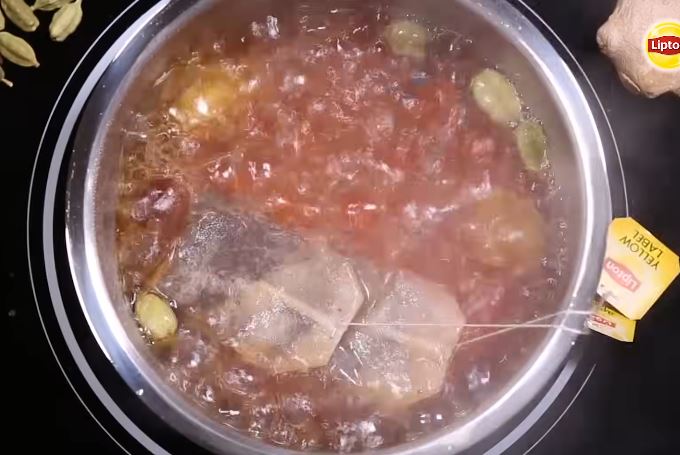
Pour in the evaporated milk. Reduce the heat to a gentle simmer and cook for a further eight to ten minutes, stirring occasionally, until the tea has reduced and thickened slightly and turned that beautiful caramel color. Do not worry if a skin forms on the surface – you will strain it out.
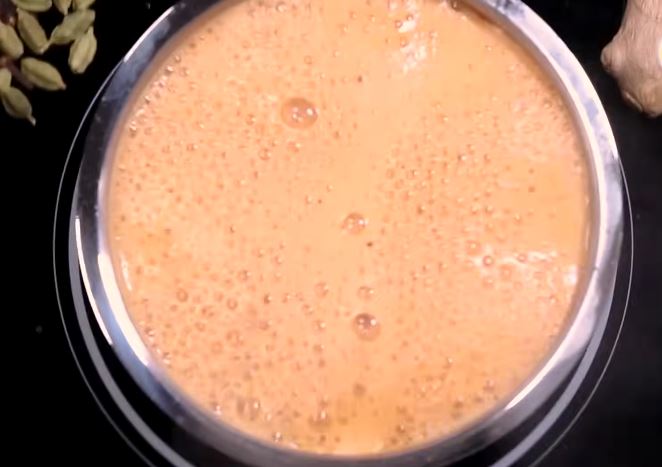
Pour through a fine strainer into a teapot or directly into cups, pressing the tea and spices gently against the strainer to extract every last drop. Serve immediately and drink it hot.
What to serve karak chai with
Karak is the most versatile tea I know – it goes with almost everything and suits every time of day. For breakfast, it is beautiful alongside balaleet, the Gulf sweet vermicelli and egg dish, or with fresh manakish straight from the oven.
For an afternoon break, Marie biscuits dunked into the cup is the classic. For something more indulgent, karak alongside luqaimat – the little fried dough balls drizzled with date syrup – is a combination that will ruin you for regular tea forever.
It also pairs beautifully with samosas, cheese puff pastry bites, headway, or any loaf cake or cookie you have on hand.
The tea is not too sweet, which is deliberate.
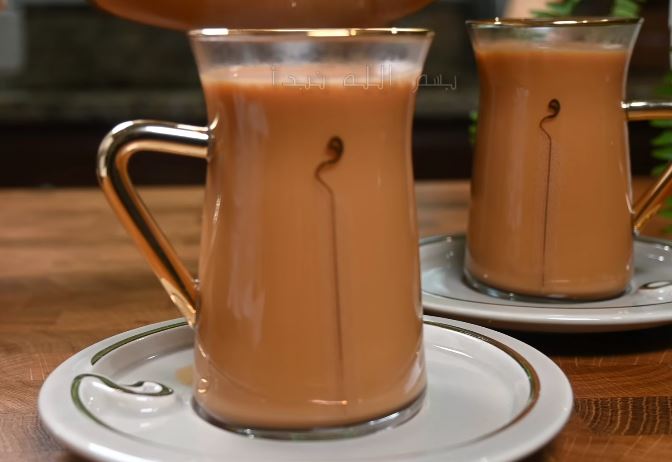
Karak Chai Variations
Dairy-free karak: Oat milk produces the closest result to evaporated milk – creamy, neutral, and it thickens nicely with simmering. Coconut milk gives a faint tropical note that is surprisingly pleasant. Almond milk works but produces a thinner cup. Use whichever you prefer and simmer a little longer to compensate for the reduced fat content.
Extra spiced: Add a small cinnamon stick and four or five whole black peppercorns with the other spices. The pepper adds a gentle heat at the back of the throat that is very warming in cold weather.
Stronger tea: Use an extra tablespoon of loose tea or an additional tea bag, and extend the initial boiling time by two minutes. Some people like their karak so strong it is almost opaque.
Sweeter karak: Taste before straining and stir in an extra teaspoon of sugar if needed. Alternatively, serve extra sugar on the side so each person can adjust their own cup.
Cardamom evaporated milk version: Available in most Middle Eastern grocery stores, this is a lovely shortcut — use it in place of regular evaporated milk and reduce the cardamom pods to three.
Frequently Asked Questions
Do I have to caramelize the sugar?
No, you can add the sugar and hot water together and stir until dissolved. The tea will still be delicious. But the caramelized version has a depth and color that is worth the extra five minutes if you have them. Once you have made it that way you will find it hard to go back.
Can I use tea bags instead of loose leaf?
Yes, three tea bags work perfectly in place of two tablespoons of loose leaf. Remove them after the initial boiling stage rather than leaving them to simmer with the milk, or the tea can turn slightly bitter.
Why is my karak not thick enough?
Simmer it longer after adding the milk. The thickening happens through evaporation and reduction, so a gentle, steady simmer for the full eight to ten minutes is important. Do not rush it over high heat – the milk will scorch before it reduces.
Can I make karak without saffron?
Yes. The saffron is a small addition that adds fragrance and a little color, but the tea is still wonderful without it. If you have it, use it. If not, proceed happily without.
Can I make a large batch?
Karak scales up very easily – simply multiply all ingredients proportionally. It keeps in the fridge for up to two days and reheats well on the stovetop over low heat or in the microwave. The flavor actually deepens a little overnight.
How to store it
Pour leftover karak into a jar or airtight container and refrigerate for up to two days. Reheat gently on the stovetop, stirring as it warms, or in the microwave in thirty-second intervals. It will be just as good the next day, possibly better.
Additional Tips
- Do not stir the sugar as it caramelizes. This is the one instruction that really matters in this recipe. Stirring encourages crystallization – the sugar seizes up into a grainy white mass instead of melting into a smooth caramel. Put it in the pan, turn the heat to medium, and walk away.
- Simmer the tea with the spices before the milk goes in. The spices need time in the hot water to open up and release their flavor – if you add the milk too early, it cushions the extraction and the tea ends up tasting weak and flat. Five to seven minutes of proper simmering in the water first makes an enormous difference.
- Do not rush the reduction after the milk goes in. Eight to ten minutes of gentle simmering is what takes karak from tea-with-milk to something thick and caramel-colored. High heat will scorch the milk. Low and patient is the way.
- Strain it well. Press the tea leaves and spices firmly against the strainer to extract every last drop of flavor – the best part of the tea is often what comes out in that final press.
Karak Chai Recipe
Ingredients
Method
- Place the sugar in a medium saucepan over medium heat. Leave it undisturbed until it melts and turns a deep amber caramel color. Slowly stream in the hot water, stirring to combine. Any hardened pieces of caramel will dissolve as the liquid heats.
- Add the tea, cardamom pods, cloves, saffron, and ginger. Bring to a boil and simmer for 5 to 7 minutes until the spices are deeply fragrant and the tea is very dark and strong.
- Pour in the evaporated milk. Reduce to a gentle simmer and cook for 8 to 10 minutes, stirring occasionally, until the tea has thickened slightly and turned a rich caramel color.
- Pour through a fine strainer into a teapot or directly into cups. Serve immediately.