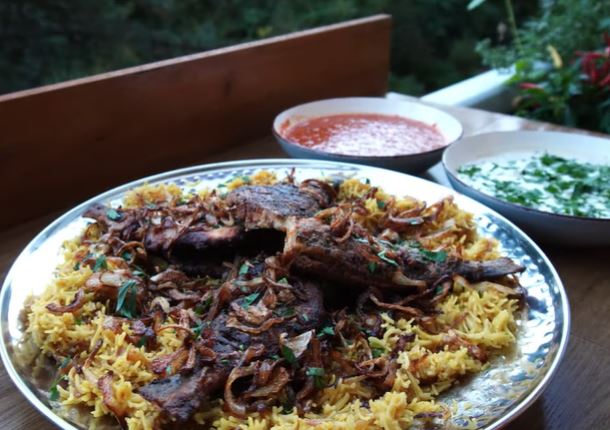
Golden, warmly spiced rice cooked in a sauce of deeply caramelized onions, topped with pan-seared white fish and finished with toasted pine nuts, fresh parsley, and a drizzle of tahini. Sayadieh is one of the great Lebanese rice dishes that comes together from a handful of simple ingredients.
What is sayadieh?
Sayadieh (صيادية) comes from the Arabic word for fisherman – “sayad” – and the name translates roughly to “the fisherman’s catch.” It is a Lebanese rice and fish dish that originated along the coast, where the day’s catch would be turned into a fragrant, spiced meal that could feed an entire family from a single platter.
The dish has two defining characteristics that set it apart from any other rice and fish combination. The first is the caramelized onion sauce – whole sliced onions cooked down until deeply golden and sweet, then blended with water, tomato paste, and warm spices into a rich, amber-colored broth that the rice absorbs as it cooks.
The second is the spice blend: cumin, cinnamon, and turmeric working together to create something that is warm and aromatic without being sharp or overwhelming. It is a distinctly Lebanese combination, the kind of flavoring that makes a dish instantly recognizable as coming from this particular part of the world.
Traditionally, sayadieh is made with whole fish – the bones simmered into a stock that the rice is cooked in. That version is wonderful and worth making on a day when you have time and a good fishmonger on hand. This version uses fillets, which cuts the cooking time considerably and produces a result that is every bit as good.
Why you’ll love this recipe
Sayadieh looks like the kind of dish that requires skill and patience. It is not. There are three components – the onion sauce and rice, the fish, and the garnish – but each one is straightforward, and the steps move quickly once you understand what you are doing.
The caramelizing of the onions is the step that cannot be rushed, and it is also the step that makes everything else work. Those deeply golden onions, blended into the cooking liquid, give the rice a sweetness and depth that no shortcut can replicate. Everything else follows naturally from there.
I brought this to the table for guests last month – a large platter of amber rice topped with whole pan-seared fish fillets, scattered with toasted pine nuts and parsley – and the reaction was everything sayadieh deserves. One friend asked me if I had been cooking all day. I had been cooking for fifty minutes.
Sayadieh Ingredients
The onions:
Three to four large onions, thinly sliced. This seems like a lot and it is – until you start cooking them and watch them collapse and deepen into something extraordinary. Go all the way to a deep golden brown, darker than you think is right. That color is flavor.
The spices:
Cumin, turmeric, and cinnamon for the rice; cumin and paprika for the fish. These are the spices that give sayadieh its signature warmth. You do not need a pre-mixed fish spice blend – these three things, which you almost certainly already have, do exactly what is needed.
The rice:
Basmati, soaked for twenty minutes and rinsed until the water runs clear. The soaking matters here – it ensures the rice cooks evenly and stays fluffy and separate rather than gummy. The rice cooks in the blended onion sauce rather than plain water, which means every grain absorbs that sweet, spiced, caramelized flavor all the way through.
The fish:
Any white, flaky fish works well – cod, halibut, snapper, sea bass, or hammour if you can find it. Ask your fishmonger to skin and fillet it and cut it into large pieces, roughly five to seven pieces for 1.5 pounds of fish. You want substantial pieces that will sit proudly on top of the rice rather than disappearing into it.
The garnish:
This is not an afterthought. Toasted pine nuts, the handful of caramelized onions you reserved at the beginning, and generous chopped fresh parsley are what turn a good dish into a beautiful one. The nuts add crunch, the reserved onions add sweetness, and the parsley adds color and brightness. All three are essential.
How to make it
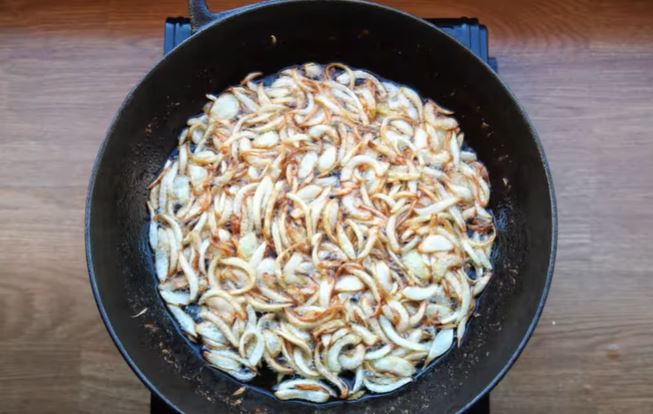
Heat the oil in a large, deep pot over medium-high heat. Add the sliced onions and cook, stirring every few minutes, for ten to fifteen minutes until they have collapsed completely and turned a deep, rich golden brown – not pale gold, not light caramel, but the color of dark honey.
Remove them immediately to a paper towel-lined plate to prevent them burning further. Reserve a generous handful for garnish.
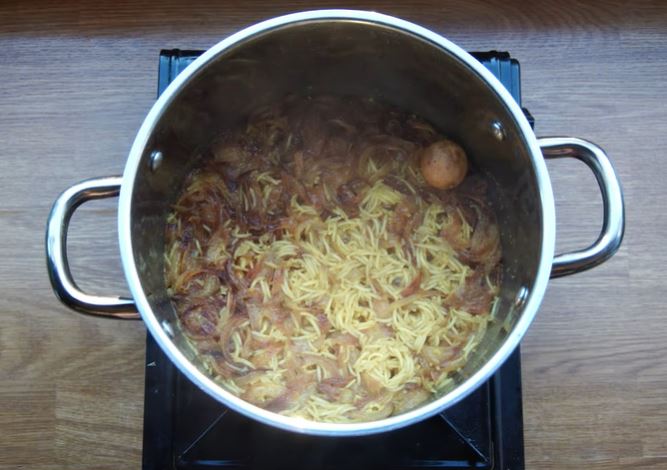
Place the remaining caramelized onions in a blender with one cup of water, the tomato paste, cumin, turmeric, cinnamon, salt, and pepper. Blend until smooth and a thick, fragrant sauce forms.
Pour this sauce back into the same pot. Add the remaining three cups of water and the soaked, drained basmati rice. The liquid should sit about half an inch above the rice – add a splash more water if needed.
Stir, bring to a boil, then cover with a tight-fitting lid and cook on the lowest heat for fifteen to twenty minutes until all the water has been absorbed. Remove from the heat and leave completely undisturbed, lid on, for ten to fifteen minutes to steam. Do not lift the lid.
While the rice steams, cook the fish. Mix the cumin, paprika, salt, and pepper together and sprinkle evenly over both sides of each fillet. Heat the oil in a large skillet over medium-high heat until shimmering, then add the fish and cook for two to three minutes per side until golden on the outside and white and flaky all the way through. Work in batches if needed – do not crowd the pan.
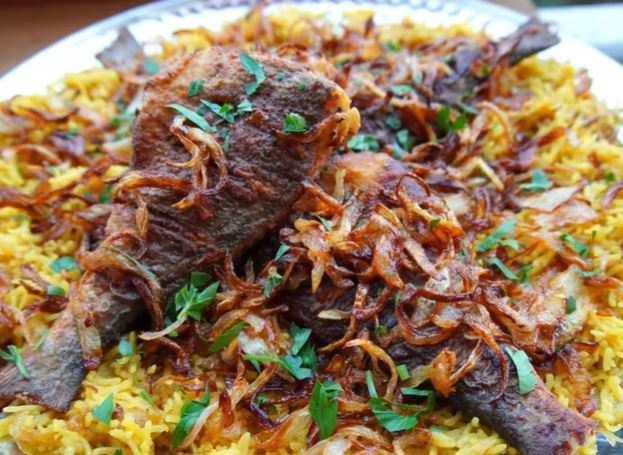
To assemble, spread all the rice across a large serving platter in an even layer. Arrange the cooked fish fillets on top. Scatter the toasted pine nuts, reserved caramelized onions, and chopped parsley generously over everything. Serve immediately with tahini sauce and lemon wedges on the side.
How to caramelize onions properly
This deserves its own paragraph because it is the heart of the recipe. Slice the onions as thinly and evenly as you can – thin slices cook evenly, thick ones cook unevenly and some will burn before others are done.
Use a wide pot and enough oil to coat the base. Medium-high heat, not low – low heat steams the onions rather than caramelizing them, and you will be standing there for forty minutes.
Stir every few minutes but not constantly, which also prevents browning. And when they look done, go a little further. The deeper the color, the better the flavor.
What to serve sayadieh with
Tahini sauce is the classic accompaniment and the one I always make. Whisk two tablespoons of good tahini with the juice of half a lemon, a big pinch of salt, and enough cold water to thin it – start with two tablespoons of water and add more until it flows easily. Drizzle it over the platter at the table or serve in a small bowl alongside.
For a full Lebanese spread, a parsley and tomato salad dressed with tahini is the ideal side – finely chop two large handfuls of parsley, dice one tomato very finely, and toss with the same tahini dressing above. It is bright, fresh, and cuts through the richness of the spiced rice beautifully.
A simple green salad with lemon dressing works equally well. And always a basket of warm flatbread, because there will be sauce worth mopping up.
What to do with leftover tahini sauce
If you make more tahini sauce than you need — and you should, because it is useful for everything — it keeps in the fridge for up to a week in a sealed jar. Drizzle it over roasted vegetables, serve it alongside grilled meat, stir it through warm chickpeas, or use it as a dipping sauce for flatbread. Lebanese cooking runs on tahini. Make extra and find a use for it every day of the week.
Common Sayadieh Variations
Oven-baked fish: If you prefer not to pan-fry, season the fish fillets the same way and bake at 400°F for twelve to fifteen minutes until cooked through. The rice and garnish stay exactly the same.
Traditional whole fish version: If you have time and access to a good fishmonger, ask for a whole snapper or sea bass. Simmer the cleaned fish carcass and head in water with a bay leaf and half an onion for thirty minutes to make a proper stock, then use this in place of the water in the rice. The depth of flavor is extraordinary.
Vegetarian sayadieh: Leave out the fish entirely and use the spiced onion rice as the base of the dish. Top with roasted cauliflower or chickpeas in place of the fish, and proceed with all the garnishes. The rice is so flavorful it holds the dish together beautifully on its own.
Extra garnishes: Some versions of sayadieh include a scattering of toasted slivered almonds alongside the pine nuts, or a drizzle of pomegranate molasses for a sweet-tart contrast. Both are lovely.
Recipe FAQs
How dark should I take the onions?
Darker than feels comfortable. You want a deep golden brown – the color of dark honey or weak coffee – not pale gold. Pale onions make a pale, sweet sauce. Dark onions make a rich, complex, deeply savory one. Do not pull them from the heat too early.
My rice turned out mushy. What went wrong?
Most likely the rice was not rinsed thoroughly enough before cooking, which left excess starch that causes gumminess. Rinse the soaked rice under cold running water until the water runs completely clear – this can take two to three minutes. Also check that your lid fits tightly; steam escaping during cooking means the rice absorbs the liquid unevenly.
Can I use a different type of rice?
Basmati is strongly recommended — its long grains stay fluffy and separate and absorb the flavored cooking liquid beautifully. Short-grain or medium-grain rice will become sticky and stodgy and lose the lightness that makes sayadieh’s rice so appealing.
What fish works best?
Any white, flaky fish with a mild flavor. Cod is the most accessible. Halibut is meatier and holds its shape very well. Snapper has a slightly sweet flavor that works beautifully with the spices. Hammour – a Gulf fish also known as grouper — is the most traditional choice if you can find it. Avoid oily fish like salmon or mackerel, which will overpower the delicate spice balance of the dish.
Can I make any part of this ahead?
The caramelized onions can be made up to two days ahead and refrigerated – they actually improve with time. The rice is best made fresh. The fish should always be cooked to order and served immediately.
Storage
Store leftovers in an airtight container in the fridge for three to four days. Reheat the rice gently on the stovetop with a splash of water, or in the microwave covered with a damp paper towel to prevent it drying out.
The fish reheats best in a low oven – 320°F for eight to ten minutes – rather than the microwave, which can make it rubbery.
Sayadieh can be frozen for up to three months, though the texture of both the rice and the fish changes somewhat on thawing.
Sayadieh (Lebanese Fish and Rice)
Ingredients
Method
- Preheat the oven to 350°F (180°C) and line baking sheets with parchment paper.
- Rub the flour and butter together until crumbly, then mix in the eggs, milk, sugar, baking powder, vanilla, lemon zest, and salt to form a smooth dough.
- Wrap and chill the dough for 30 minutes.
- Divide the dough, roll into ropes, and shape into knots.
- Bake for 10–15 minutes until lightly golden, then cool completely on a wire rack.
- Mix powdered sugar and lemon juice to make the icing.
- Dip the cooled cookies in the icing, add sprinkles if desired, and let set before serving.
Notes
More recipes to try
If sayadieh has made you a convert to Lebanese rice dishes, these are the recipes to make next:
Makloubeh — the dramatic upside-down rice dish with layers of spiced meat, vegetables, and rice, flipped onto a platter at the table to reveal its architecture. One of the great Lebanese showstoppers.
Mujaddara — lentils and rice cooked together with mountains of caramelized onions, finished with a drizzle of olive oil. Simple, ancient, and deeply satisfying in a way that is hard to explain until you have eaten it.
Lebanese hashweh rice — spiced ground beef and rice cooked together with warm spices and toasted nuts. The rice dish that appears at every Lebanese family gathering and disappears faster than anything else on the table.
Bazella w riz — pea and meat stew served over vermicelli rice. The weeknight dish every Lebanese person grew up eating, and the one they always come back to when they want something that feels like home.